Archive for the 'comic books' Category

h1

Mary, Mary, Quite Contrary

June 23rd, 2009 Posted by david brothers

I’m a little surprised at how much of my taste in comics has its origins in Daredevil. I got back into comics largely through buying copies of Frank Miller’s Daredevil Visionaries. I’d never read his run on Daredevil, and it was just what I needed to leapfrog onto the Bendis run, which led to other Marvel books, and so on. When I was a kid, Miller was my introduction to both grown-up comics and crime comics.

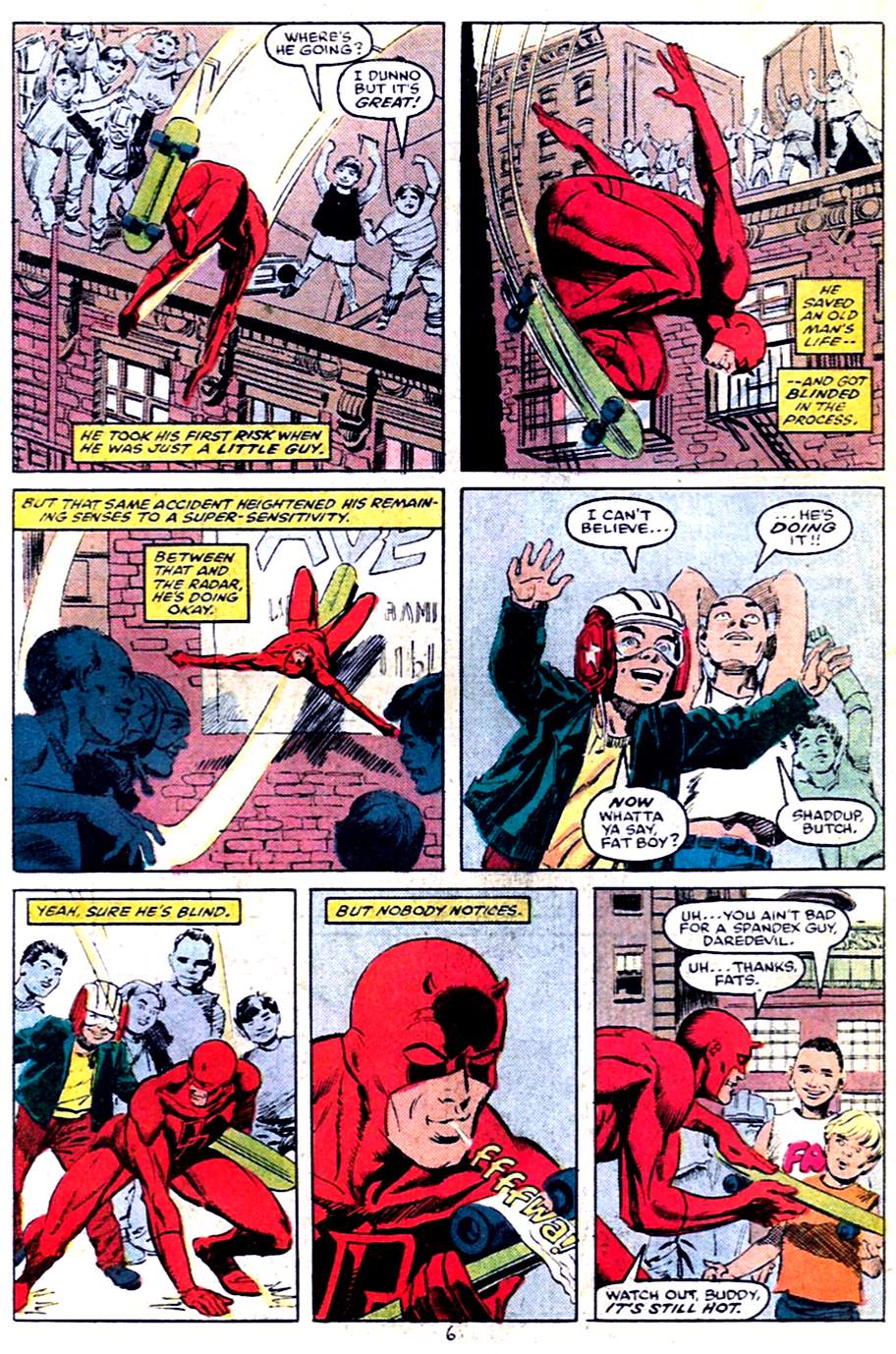
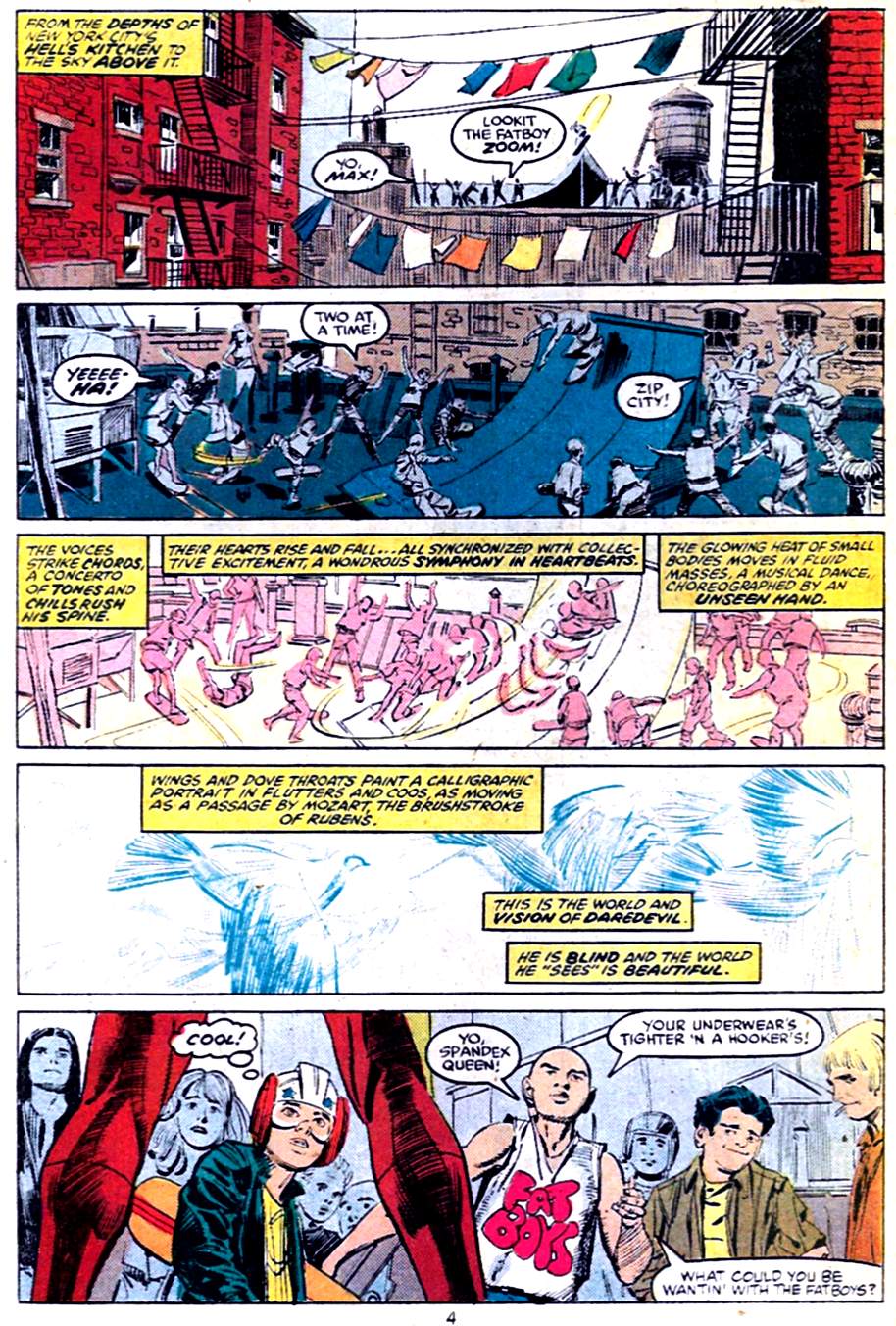
There’s another aspect to this that I haven’t talked about, before. Before I was introduced to Grant Morrison’s work, before I discovered Joe Casey, Ann Nocenti introduced me to weird comics in the pages of Daredevil. I didn’t have many issues of her run, but I had some of the ones with Typhoid Mary and a few seriously off-kilter tales.
daredevil239p04daredevil239p05daredevil239p06

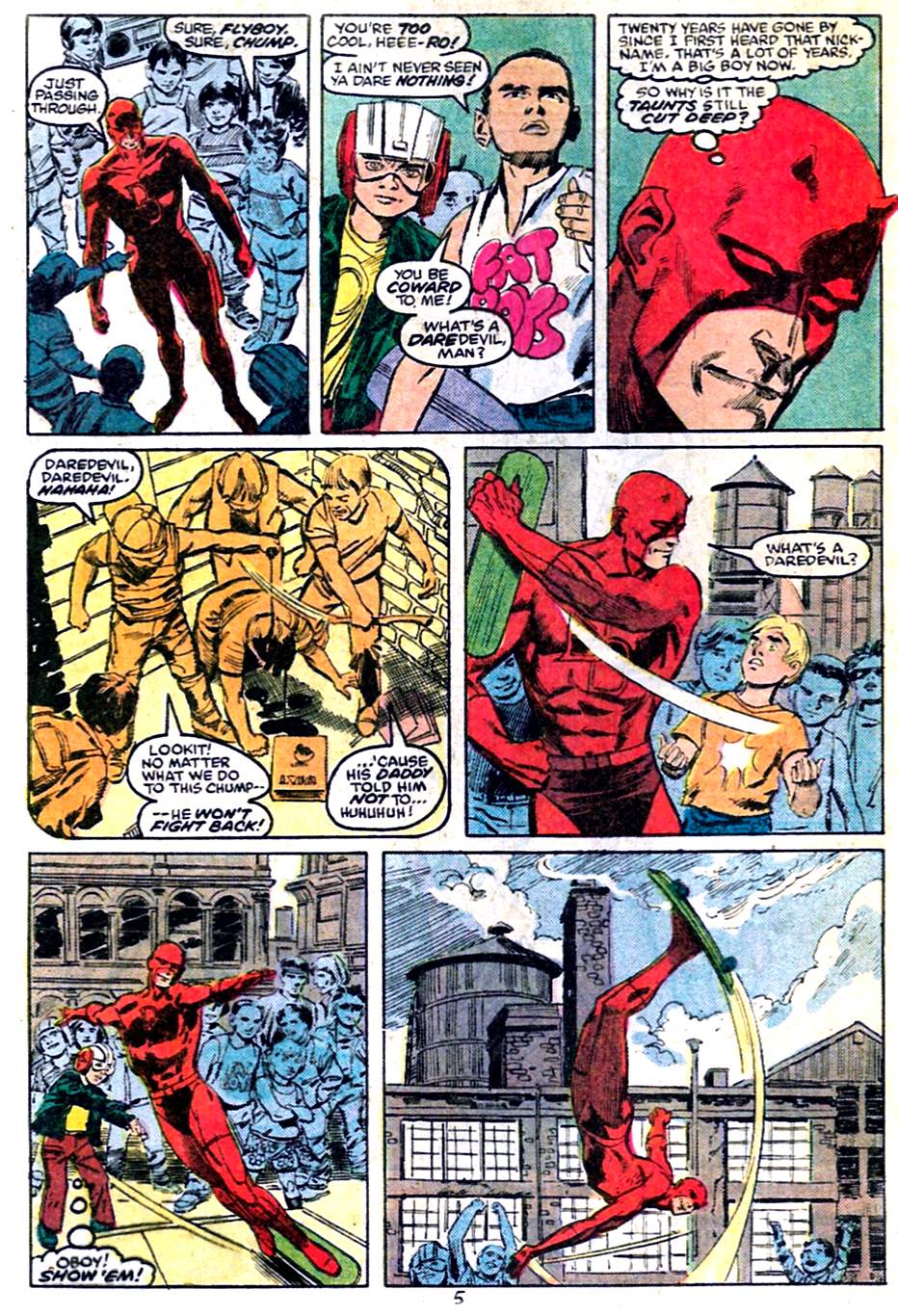
I’ve been re-reading Nocenti’s run on Daredevil, and it positively leans. Her run is as much about how Daredevil is an overly violent fascist and a failure of a hero as it is about swashbuckling and dating. Nocenti got right up in the face of what it meant to pull on tights and beat up a criminal and did a pretty good job of breaking it down into its component parts. She has Murdock struggle with the thought of solving problems with his fists, forcing him to look at the effect he has on his environment. She introduced the Fatboys, a gang of youths who alternate between assisting Daredevil and getting into trouble. They follow his example and sometimes they get hurt. Sometimes they hurt people.

What’s so amazing about Nocenti’s run is that she followed up Frank Miller and David Mazzuchelli’s Born Again, one of the top five best superhero stories. Picking up the reins after two masters of the game told an amazing story must’ve been daunting, but Nocenti handled it well. She picked up the storylines they left, continuing on with a law practice-less, but happy, Murdock.

Brubaker and Bendis’s Daredevil is inextricably linked to the Frank Miller version. They’re continuing on in the same kind of story that he started back in the day. Nocenti, though, swerved right out of the gate. Her Murdock flipflops from confident to troubled, wrestling with his demons with the help of his girlfriend.

Typhoid Mary, whose origin story is collected in Daredevil Legends Vol. 4: Typhoid Mary, has been one of my favorite villains since I was a kid. Obviously, I didn’t get the Madonna (Mary)/Whore (Typhoid) complex that helps define her character or the subtle (?) feminism that Nocenti slipped in. There was just something about her that was, and is, endlessly interesting to me. She wasn’t like Batman’s villains, who were just crazy for the sake of being crazy. She wasn’t like Spider-Man’s villains, either, who were concerned with wealth. I don’t know that I had the mental capacity as a kid to articulate why I enjoyed reading about her so much. Mary was just undeniable.

The best word for her, as near as I can tell, is “uncomfortable.” Lesser writers will treat her as a generic crazy chick, Poison Ivy Plus Catwoman Minus Clothes. Nocenti, though, used her like a scalpel. She wasn’t a Bad Girl, but she was a bad girl. Typhoid Mary was a lot of issues distilled into one creature– religion, sexism, feminism, violence, and morality collided in her. She’s genuinely damaged goods, and troubling.

Mary is the easiest thing to point to when describing Nocenti’s run on Daredevil, but it’s just a part of the whole. There was the nuclear holocaust-obsessed son of a supervillain, the trials of the Fatboys, and the Inferno crossover. It’s creepy, but not creepy like a horror comic or a T&A book. It’s a crawling creepy, a book that makes you feel uneasy. Heroes who are far from perfect and entirely too human, a city full of people who refuse to be categorized into neat little boxes, the way a homeless woman tries to tell her husband where her gift is before she’s murdered by a villain… “that’s not right” sums it up pretty well.

Nocenti’s one of my favorite writers. No wishy-washy “one of my favorite female writers” or “throwback writers” or whatever. Just straight up, real talk, “favorite writers.” She’s good at what she does, and well worth seeking out. She’s spent the past few years out of comics, including filming a documentary, but she’s got a story in Daredevil 500 this August, with art by David Aja.

Good on her and good on Marvel for seeking her out. I’d like to see more work out of her in the future. I miss her voice in comics. Marvel should reprint more of her Daredevil. She did something special, and I think she’s been unfairly overshadowed by Miller’s run. Both are classic for different reasons.
h1

Friday Flashbacks 02: Ghosts and Rivals

June 19th, 2009 Posted by Gavok

I guess I should put down some set-up first. This is from Avengers/JLA #4, written by Kurt Busiek and drawn by George Perez. It came out a little bit before Marvel and DC made some of their bigger modern changes. The team rosters were still more classic than in recent years, still before the days of Disassembled and Crisis of Conscience. Hal Jordan was still the Spectre.

I won’t go too deep into the story, but it involves Krona making a bet with the Grandmaster that puts the two super-teams on opposing sides. Not that that needs too much extra effort, though, as Captain America and Superman seem to have it in for each other. Superman sees mutant hatred, Dr. Doom, the Hulk and the Punisher running wild and considers the Avengers a bunch of failures. Captain America sees how the people in the DC world worship the Justice League to the point of museums and monuments and considers them little better than world conquerors. This leads into more than one throwdown, including a fight where Superman beats up Thor.

Fast-forward a bit. To save reality from Krona, the Grandmaster has been pushing the two worlds closer together. Reality rewrites itself again and again. The Avengers and Justice League go from being from two distant alternate realities to neighboring realities. Then they go from two teams that visit each other’s worlds on a regular basis to two teams that co-exist in the same world. Few are able to see through the lies.

Finally, the two teams find the Grandmaster, who wants the heroes to go stop Krona from destroying both their worlds. Due to reality being rewritten over and over, the teams are both down to their more base, classic rosters and identities and want to know exactly what they’re fighting for. Using the last of his powers, Grandmaster shows them a series of screens that broadcasts their histories. Despite all their victories, it focuses mainly on these heroes watching the losses that are meant to be. Tony Stark’s alcoholism, Aquaman’s loss of hand, Bane breaking Batman’s back, Doomsday killing Superman, Captain America losing his abilities and failing in his attempt to rely on armor tech, Odin’s death, Jason Todd’s death, and so on. The more important ones here are that Barry Allen sees that he’s going to die, Scarlet Witch and Vision see that their children will be creations from Wanda’s own madness, Giant Man sees the smack that he will never live down and Hal Jordan sees his descent into becoming Parallax.

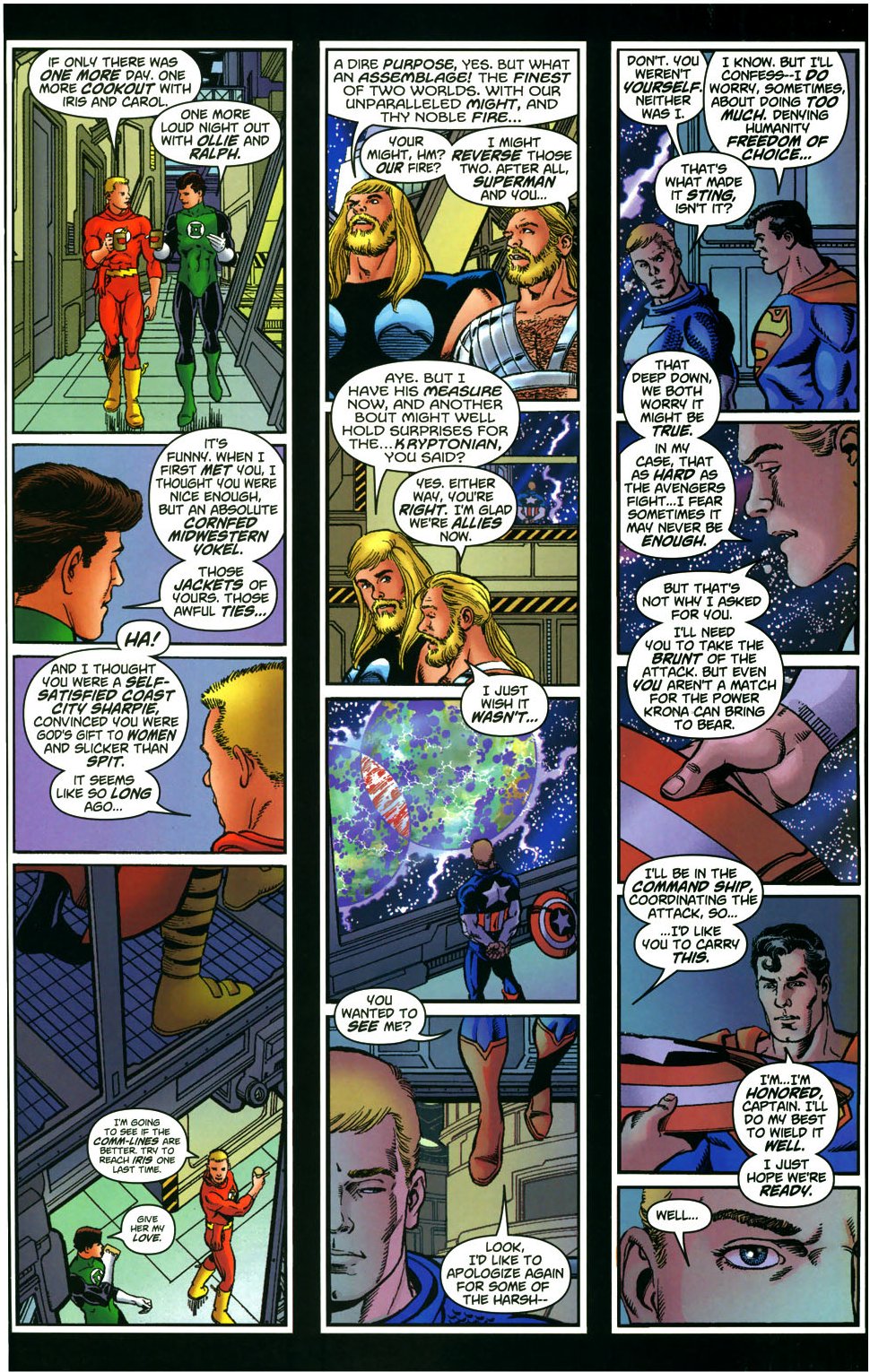
And yet, in the end, the two sides decide that it is not up to them to judge the realities they are saving. They band together and plot against Krona. Superman suggests Captain America lead them, which he agrees to.

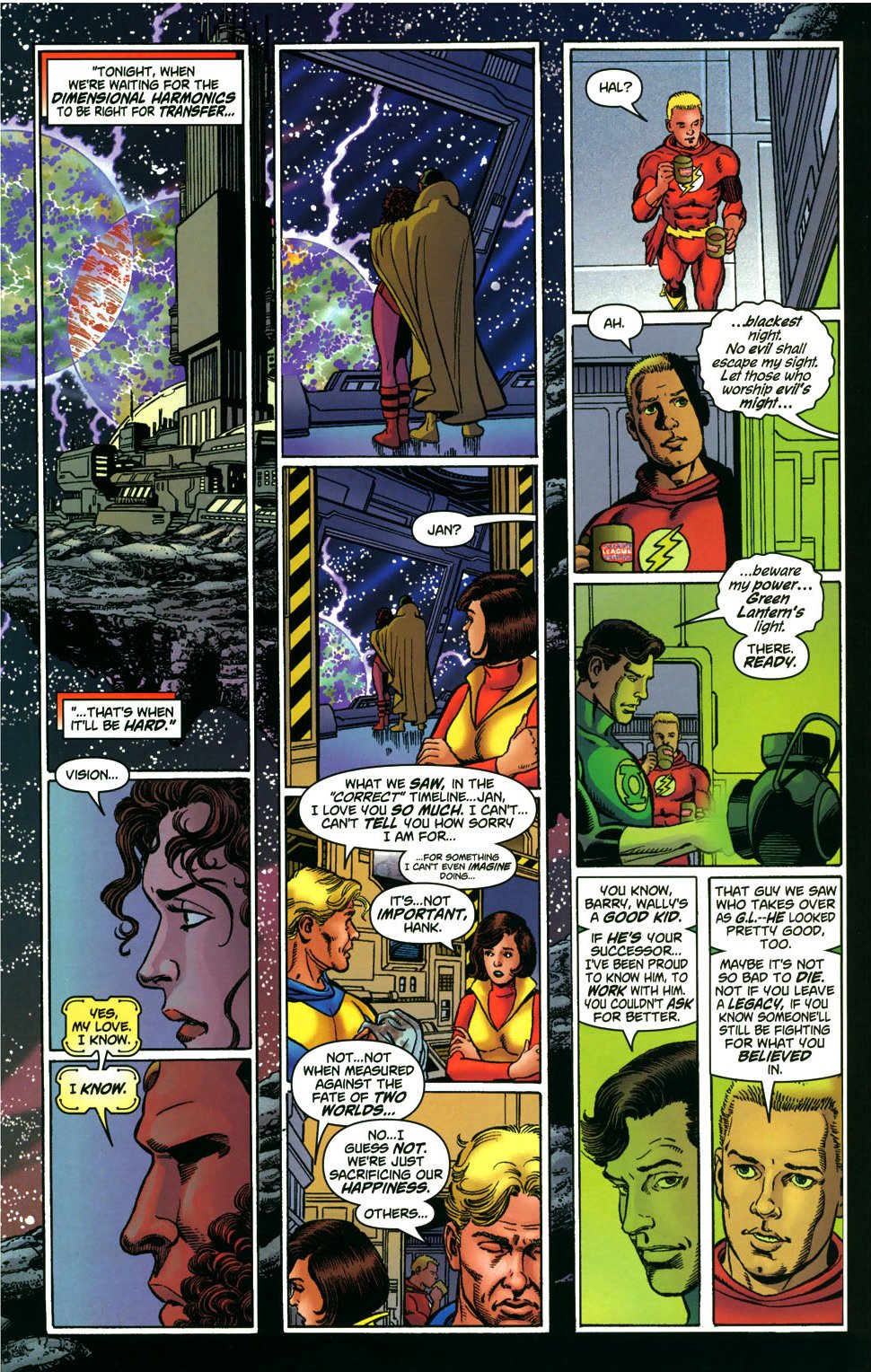
I swear, when I was intending to write this article, I thought these pages were more than two. Three, maybe four. They’re just so dense with dialogue that it’s bursting at the seams. That’s George Perez for you, I guess.

All five of those different conversations are aces, especially when you notice the segues. Notice how each conversation ends with another character in the shot. It took me forever to see Captain America in the background window. What I really loved about this scene is the stuff with Hal and Barry.

How messed up it has to be for these two. Barry knows that win or lose, he’s going to be dead within hours. It’s depressing, but not nearly as bad as what Hal has to be going through. Barry goes out honorably. Hal knows that not only is he going to die, but first he’s going to go crazy and take out a bunch of his friends before becoming the Darth Vader of the DC Universe. And he’s fighting to preserve that! It’s fucked.

Maybe it’s just me, but you can read the weight of it in Hal’s oath. The way he seems so less enthused compared to all the other times. Is it defeat? Sadness? Intent to do his best one last time? Shame? Bitterness? Is it that he realizes that the very oath he’s reciting has been proven to be nothing more than a lie?

But there they are, Hal and Barry, supporting each other. Just by the mutual reassurance, the two doomed friends are all but removed of that weight. It’s a nice, bittersweet scene, but sadly loses something thanks to their later resurrections.

I think I decided about including these pages for this installment because of all of that going on these days. Personally, I feel totally fine with Hal coming back (Green Lantern is more of a job position than identity, allowing Kyle to thrive on his own, though admittedly to a lesser extent). I can’t bring myself to care about Barry Allen’s return, outside of a couple choice moments in Final Crisis. Unless Steve Rogers stays away from the Captain America mantle and becomes the new leader of SHIELD/HAMMER for an extended period of time, I feel like his death could have lasted another three years. And Bart Allen… shit, I don’t know. That poor guy got messed up so much since Geoff Johns got his hands on him that I can’t say what’s best for him at this point.

Bottom line: I guess I feel like in scenes like this, the finality of one fictional character’s death strengthens the quality of life. But that’s me.

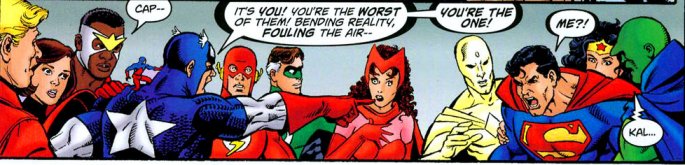
Back to the Avengers/JLA comic, there was one panel I’ve always loved for a stupid reason.

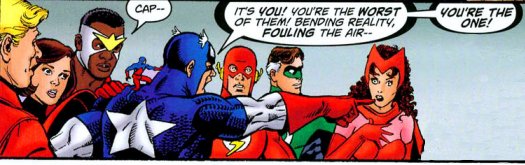
Look at Captain America. That’s the moment I realized that Steve Rogers has balls made of vibranium. He goes on to threaten Superman with such confidence that even now, my brain is trying to come up with ways for that outcome to be a possibility. I’ll get back to you on that. Cool as that is, that’s not why I bring it up.

I don’t know if this was a subtle way to intentionally foreshadow Avengers: Disassembled, but let’s see what happens when we remove the guys on the right.

Hey, now!

By the way, I still miss Hal’s kickass white hair tufts.

h1

Eyedol Worship: The Killer Instinct C-C-Comic Book

June 17th, 2009 Posted by Gavok

(Gavok note: This is another old PopCultureShock article I wrote that I figured I’d bring home to 4th Letter. Call it nostalgia from doing the Tekken article.)

Back in the mid-90’s, fighting games were a pretty big thing. Over the span of several years, an untold amount of sequels and forgettable copycats oversaturated the videogame market. Once all of that calmed down – somewhere around the turn of the millennium – only the big names remained: Street Fighter, Mortal Kombat, Tekken, King of Fighters, Guilty Gear, Virtua Fighter, etc. They continued to have sequels and updates as the others just got thrown to the curb.

And yet, for whatever reason, Killer Instinct fell off the face of the Earth despite its popularity. In the mid-90’s, the first game was huge. It was a huge seller on the SNES and the sequel was one of the first big games for the Nintendo 64. After that, it just died. Rare just kind of forgot it existed and instead made a bunch of games starring talking animals.

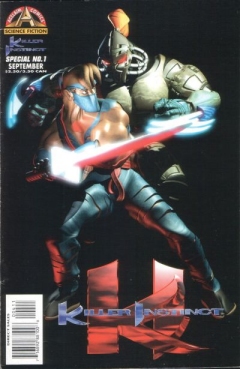
But you know what? I still remember Killer Instinct. I remember it enough that when I found out that it had its own comic back in the day, I had to get my hands on it. Scoot over, kids, and I’ll tell you the story of a ninja monk, a killer robot, a disgraced boxer, a secret agent, an animated skeleton, a man made of fire, an alien made of ice, a cyber Native American, a cloned dinosaur, a two-headed Cyclops and the evil organization that brought them all together. Let’s look at the Acclaim-released Killer Instinct comic book.

Each cover uses the rendered style that came with the games. While the style is a bit dated, it still just feels… right. That would get old quick if the interiors were like that, but thankfully they are not. Amazingly, the interior art is excellent throughout the series. They’re done by Bart Sears, Sean Chen, Steven Butler, Dale Eaglesham, Doug Tropea-Wheatley, Scot Eaton and David Boller. What the hell? The comic has seven different pencillers for six issues and somehow it feels totally consistent! That’s weird. There are a handful of different inkers too, so they can’t be to blame. Huh!

There is only one writer, though. Art Holcomb takes the reigns in all six issues of this. What’s interesting is how the series is laid out. The first three issues are a basic retelling of the first Killer Instinct game. The latter three issues are special one-shots that take place afterwards. This came out in the latter half of 1996, around the time the second game was making its way to the arcades.

Read the rest of this entry �

h1

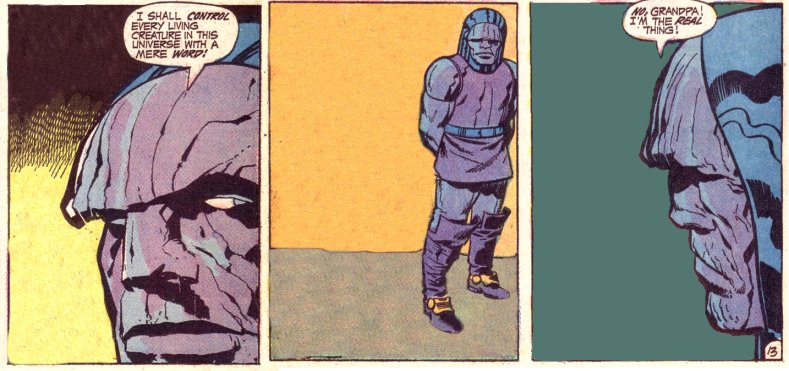
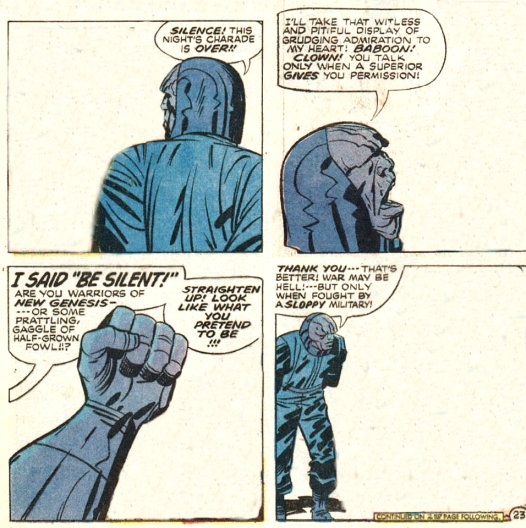
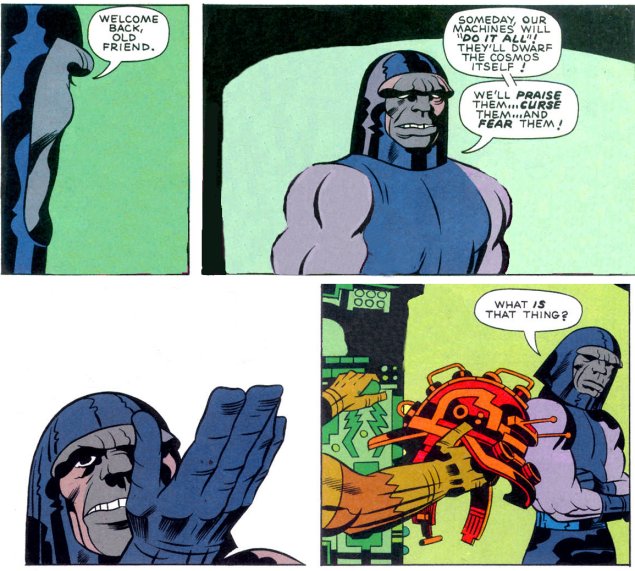
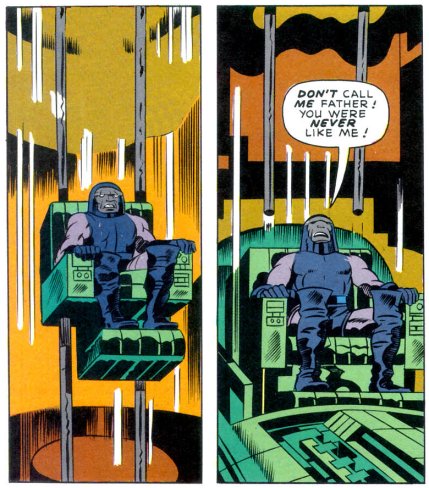
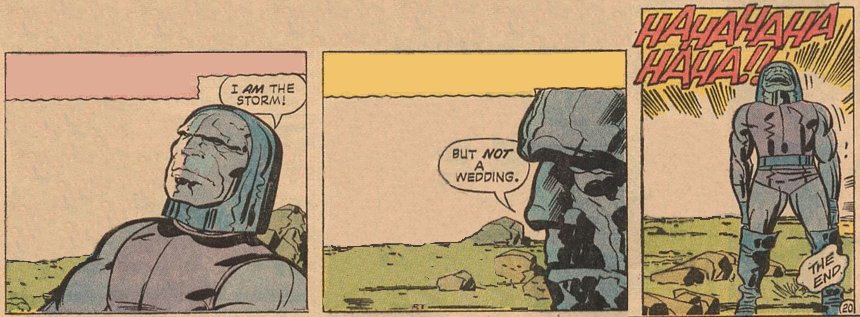
Darkseid Minus New Gods

June 17th, 2009 Posted by Gavok

This is… This… I don’t know. It just is and I made it.

With apologies to Jack Kirby and Dan Walsh.

h1

Fan Classifications

June 16th, 2009 Posted by Esther Inglis-Arkell

When you ask a certain type of person what kind of comics they like; well, first they’ll correct you.  They will say ‘graphic novels.’  And then they will tell you that they don’t have one specific interest, they just like high-quality graphic novels.

While I can admire a search for the best quality products of a medium that you like, I’ve always felt a certain contemptuous pity for those people.  Really?  Just ‘high-quality’?  Just ‘good’?  Just ‘insightful’?  These people are either liars, or are the stunted, gnarled, embittered kind of jerks who will tell you that they only listen to classical music and NPR.  Sure, their taste is unquestionable and their likes and dislikes as pure as the driven snow, but – really?  They have no guilty pleasures?  No specific areas of interest?  No morbid curiosity?  No nostalgic favorites or fannish loves or goofy objects of affection?  It just seems so flavorless and bland.

And I can say this because I without a doubt know that those people, when I tell them I like the Batsquad and the Arrows and have an irrational prejudice against Marvel, pity me just as much.

As well they might.  I’m a character-based-fan.  That?  Is like attending a Rolling Stones concert, making it backstage, and spending the whole time talking about your favorite member of the Monkees.

There are many humiliations to being a character-based-fan.  Start out with the fact that, prestige-wise, you are the lowest rung of the ladder (and considering you’re already into comics, that’s a really low ladder to begin with).  Add to that that artist-based-fans can flit to one book or another, ignoring all plot and dialogue and rhapsodizing about a page layout, and writer-based-fans can camp out for a story-arc or two before moving on.  A character-based fan is pretty much stuck in a book forever.  We’re like those frogs who get put in cold water, and then don’t jump out when it’s heated up, boiling ourselves to death.  But at least the frogs go quietly.  Character-based-fans are the ones at Cons, arguing with a panel of uncomfortable comics-professionals about how our character would never do that, while the audience hisses at us.

We’re the idiots who get into ‘who would win in a fight’ arguments and talk about the logistics of what Batman can carry around in his utility belt, and complain about how terrible a comic is while they’re buying it.

Still better than yakking about the artistic merits of Lost Girls, though.

h1

Loooooooooove is a Many-Splendored Thing!

June 15th, 2009 Posted by Esther Inglis-Arkell

Well, it’s finally happened.  I’ve finally bought Booster Gold.

Sure, many of my friends told me that it was well-written, fun, heartfelt, not too burdened with mega-continuity, and featured a lot of creative adventures.  It was, in short, exactly the book I said I wanted to be reading.  Except I wasn’t reading it.  Because this is something that you should know about me.

I hate and fear change.

Yes, you can take that into account any time I make another grumpy-old-lady ‘what are comics these days coming to,’ entry.

I got into Batman because I saw it as a child, and then my reading habits slowly expanded, usually whenever Batman teamed up with another character.  Picture me as one of those neolithic hunter-gatherer groups, the ones that tended to move whenever the sea level dropped and new land was exposed.  I’m slowly traveling through the comics world, moving whenever a book’s profits drop, exposing some previously undiscovered link with Batman that causes a team-up.  I wandered over the isthumus of Batman to the new Blue Beetle series, and when it was cancelled and became a back-up for Booster Gold, (and this issue of Booster has a Batman appearance that I am sure is no coincidence), I followed it to this series.

Which involves time-travel, saving Batman from never existing, showboating, a smart-mouth sidekick, and an idiot savant with a mentor called ‘Rip Hunter.’  Ah, yes.  This is a comic.

And this is the best time to be a comic fan.  The honeymoon period.  When you don’t worry about artists, writers, or continuity.  You have a character you love, a story you’re interested in, and a nice little stock of back-issues to wade around in.  Life is good.

h1

Notable Quotable 01: Grant Morrison x PopImage

June 15th, 2009 Posted by david brothers

Grant Morrison gave a great interview to PopImage shortly after he left Marvel in 03/04. The whole thing is a good read, but my favorite bit is on page three:

As for all this talk I keep hearing about how ‘ordinary people’ can’t handle the weird layouts in comics – well, time for another micro-rant, but that’s like your granddad saying he can’t handle all the scary, fast-moving information on Top of the Pops and there’s really only one answer. Fuck off, granddad. If you’re too stupid to read a comic page, you shouldn’t be trying to read comic books and probably don’t. As creative people, I feel we need to call time on the relentless watering down of comics design and storytelling possibilities in some misguided attempt to appeal to people who WILL NEVER BE INTERESTED in looking at or buying hand-drawn superhero comic books.

This will surprise absolutely no one, but I agree with Grant here. No caveats, even. Even with the “if you’re too stupid to read a comic page, you shouldn’t be trying to read comics.” I didn’t like his “channel zapping” approach in Final Crisis. I don’t think it came off anywhere near as well as Morrison expected it to, but I could respect the idea behind it. I liked seeing a comic where the reader had to do a bit of the work and interpret what was going on themselves, and giant blocks of exposition were delivered in a way that wasn’t just a bunch of people standing in a room. If you think about why Wonder Woman, Batwoman, Catwoman, and Giganta are called Furies for half a second, you’ll get it. You don’t need that box that says “Wonder Woman is evil now, and leads the reincarnated Female Furies.”
Still, thoughts? Is Morrison being fair?

h1

Tekken Saga and Tekken 2: Mishima Family Values

June 15th, 2009 Posted by Gavok

As much as I love fighting games and their storylines, just about all of them run into one major problem: if the series goes on long enough, the writers will run out of ideas and just pull off the same story over and over again with slight variation. King of Fighters reached this point after their ’97 incarnation. Mortal Kombat got there in its third game, though they were original enough in their ideas that it didn’t get too stagnant until several games later. Street Fighter went on for a while without this, up until Street Fighter 4. Soul Calibur is probably the worst offender, as despite five games, they’ve yet to come up with a story other than “guys fight each other in search of sword that just won’t die.”

Tekken, which is by the same company as Soul Calibur, is also a pretty bad offender. On one hand, the later the game, the more personality we get out of the characters. On the other hand, almost all the characters are window dressing to the never-ending infighting between the Mishima family members, who are all a bunch of assholes.

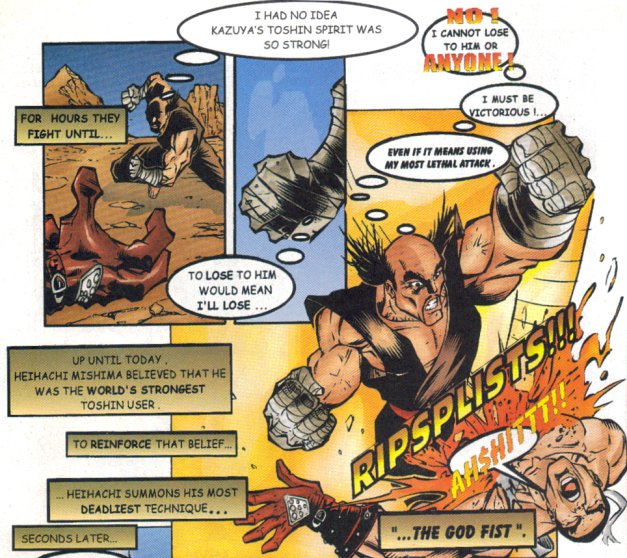
See, you have Heihachi Mishima, who is an asshole. He’s opposed by his son Kazuya Mishima, who we discover at the end of the first game to also be an asshole. Then in the third game, we get Kazuya’s son Jin Kazama, who seems like an all right guy for a while, only to succumb to being an asshole by the end of Tekken 5. Tekken 5 also introduces Heihachi’s powerful father Jinpachi Mishima, who is a pretty sweet guy, only he’s possessed by a power that’s forcing him to be an asshole.

Insert your Spaceballs joke right here.

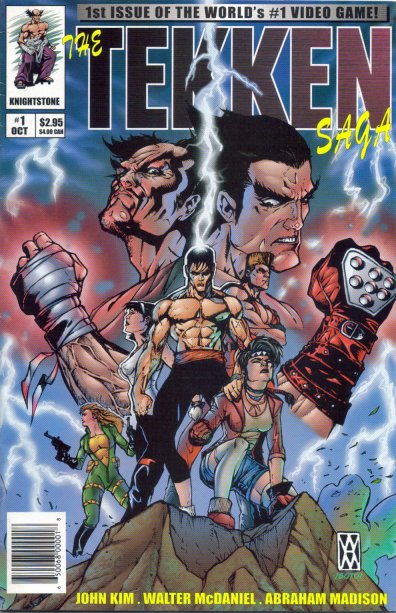
Let’s go back to the simpler days, when the rivalry was no more than Kazuya vs. Heihachi. Tekken 3 was just being released, leading to the most popular era for the Tekken franchise. To tie in with this, the comic company Knightstone put together an attempt to retell the story of the first few games with Tekken Saga.

What’s with Kazuya? It’s like he’s spooked by Law’s ability to completely ignore getting hit in the skull with lightning. Or maybe he’s weirded out by Paul Phoenix’s hair.

Tekken Saga #1 came out in October, 1997. John Kim was the writer with Walter McDaniel an art. It begins years before Tekken 1, where Heihachi holds a meeting with his top underlings at the Mishima Zaibatsu (which in the comic is spelled “Zabitsu”). Conveniently, all three of his businessman flunkies turn out to be fathers of Tekken series mainstays: E. David Gordo, Bernard Chang and James King.

Read the rest of this entry �

h1

Identification

June 14th, 2009 Posted by Esther Inglis-Arkell

A lot is made of how, in comics, readers can/will/are supposed to identify with certain characters.

I’ve talked a lot about how, when I was a kid watching Batman: The Animated Series, Batgirl was my favorite character.  A girl, running around, having adventures, kicking ass, taking names and sassing Robin was just about the coolest thing little Esther had ever seen.  And while I can’t deny that I feel a certain personal investment in Barbara Gordon, exulting in her triumphs and enduring her failures, I don’t think that’s the same as identifying with her.  Most of the characters in the Batverse are too perfect to identify with.

Identification also depends a great deal on the reader as well as the character.  When you were a kid you might feel a kinship with a fictional child, but when you’re an adult, often you look at the same character and think, “What a brat.”

Have you ever felt a strong connection between yourself and a comics character?  And if so, does the connection endure, or has it faded?

h1

Ultimatum Edit Week 4: Day Seven

June 13th, 2009 Posted by Gavok

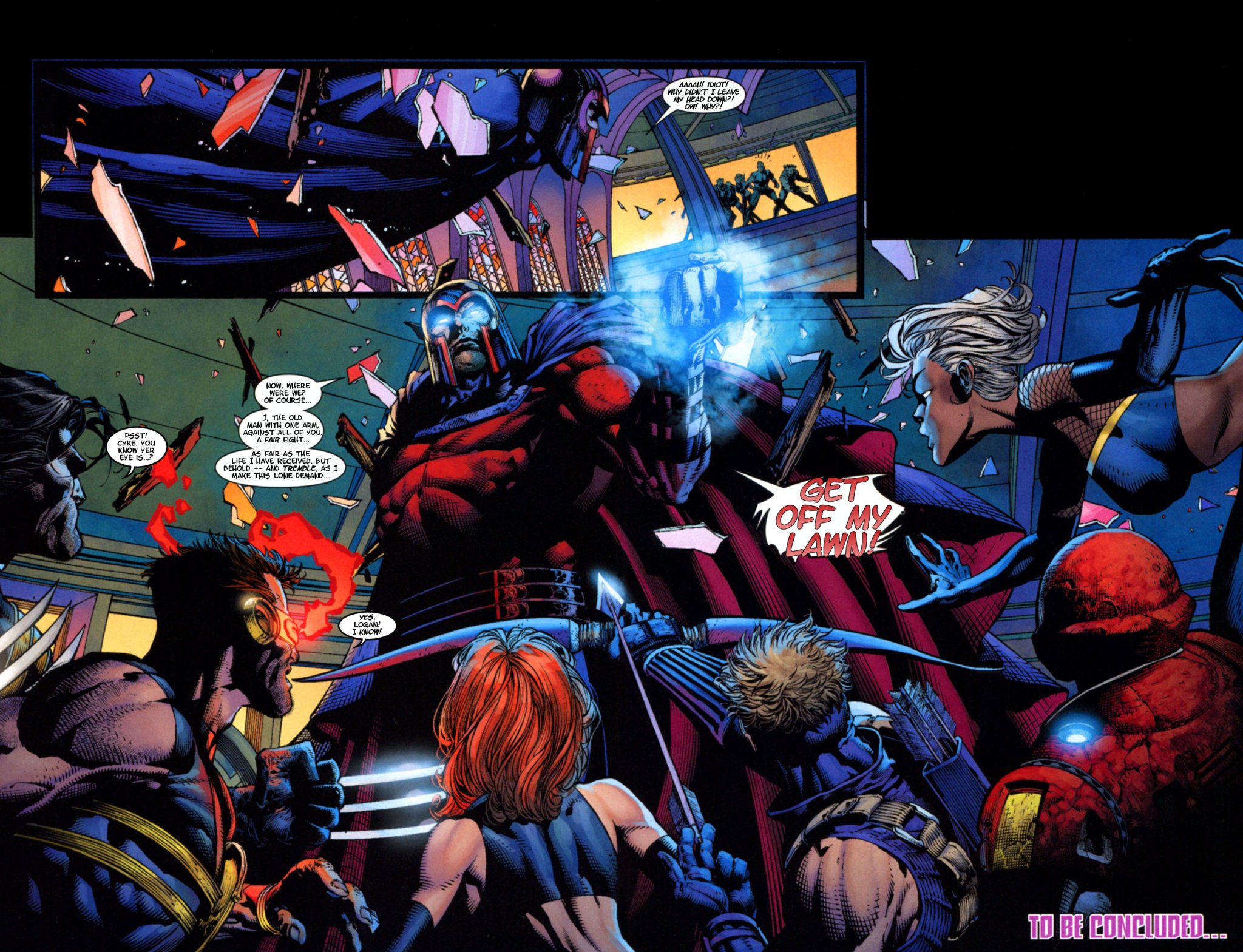
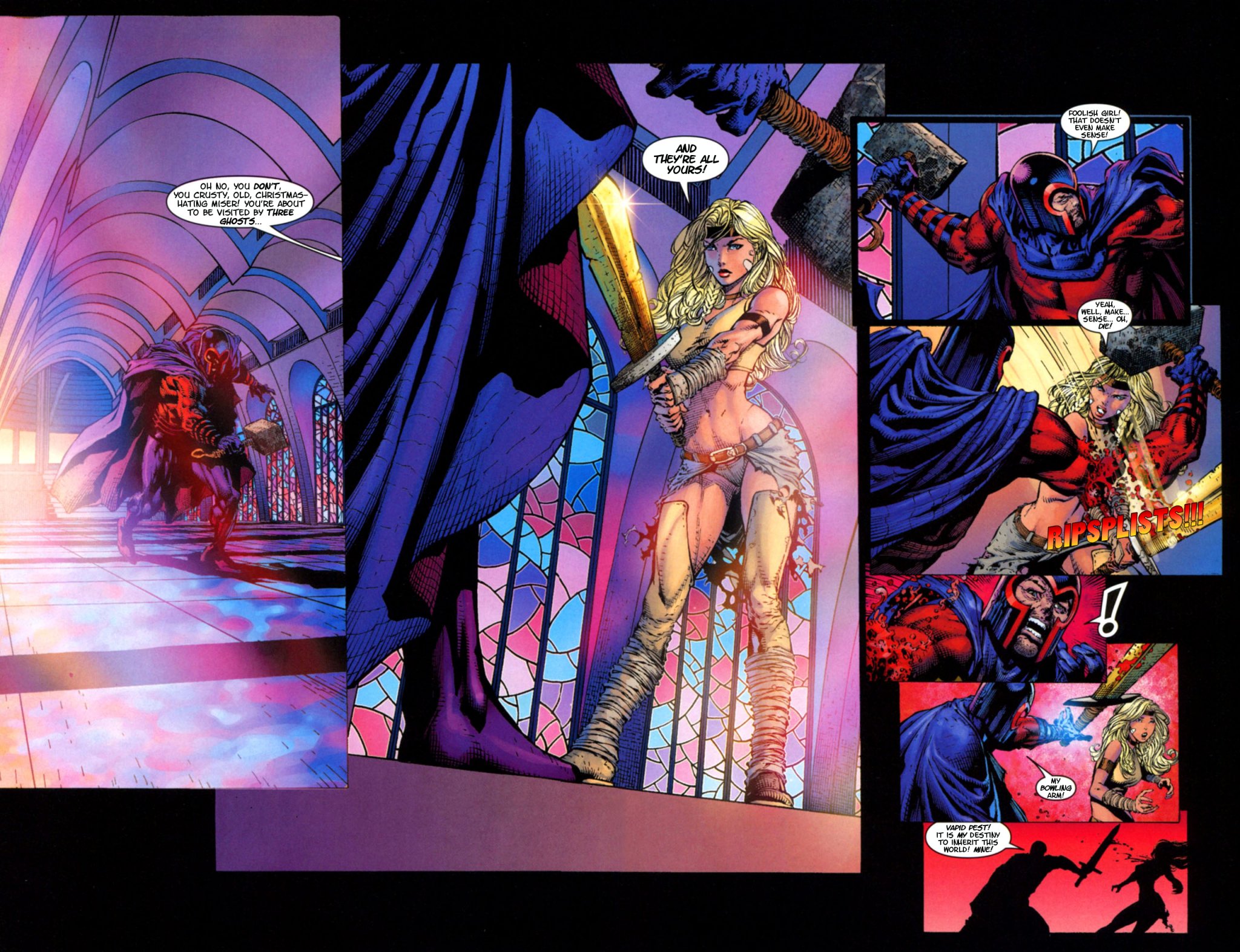
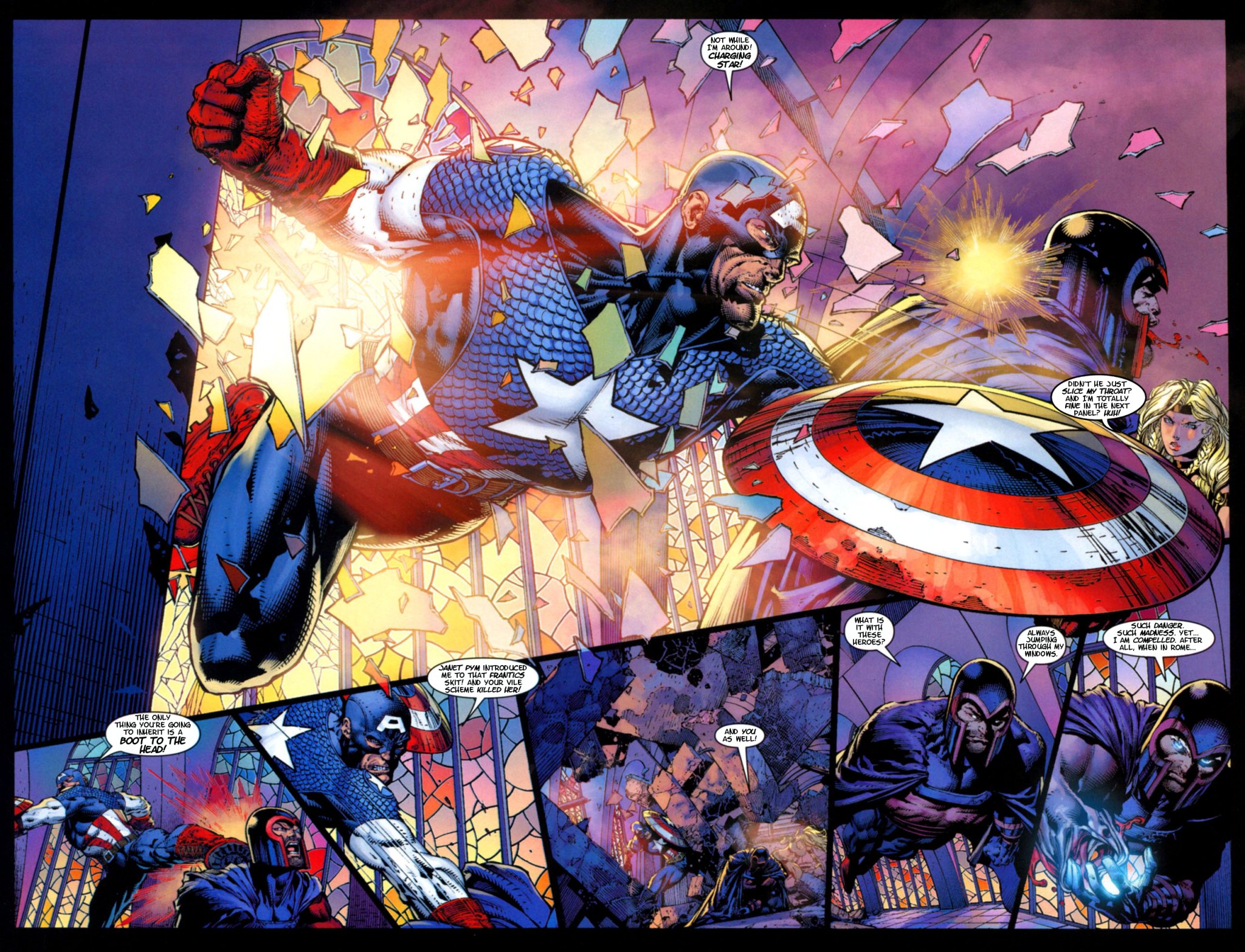
Yesterday’s installment of Ultimatum Edit brought our remaining heroes to Magneto’s lair. Magneto showed that he has balls of steel (which he can manipulate) by not blowing their planes out of the sky. Then Angel died gratuitous Loeb death #529 and Sabretooth got shot in the eye, which is as much of an inconvenience as Superman’s cellophane S was to Non.

Let’s take it home.

And there we go. Funny how Cap and Valkyrie are more of a threat to Magneto than Thor after all. ManiacClown insisted I didn’t make any jokes about how it looks like Valkyrie has the runs during that silhouette panel where Magneto cuts her, so good on him.

And if you’re rightfully wondering about that sound effect that I inserted into that scene, well, I couldn’t help myself. You see, it’s a ridiculous piece from a ridiculous sequence in a ridiculous comic that I will be reviewing in the coming days. Want a peek? Knock yourself out. But don’t say I didn’t warn you.

Phew. Only one more issue of this left.

Week 5!