Archive for the 'comic books' Category

h1

Humor vs. Character: Death Match?

October 28th, 2009 Posted by Esther Inglis-Arkell

ohkyle

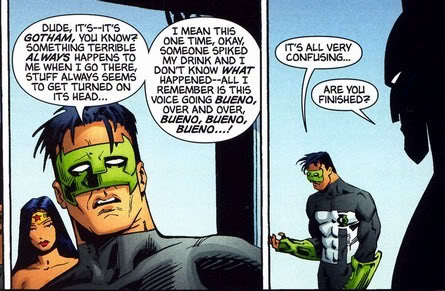
The character responsible for Kyle disgusted lip-curl is Bueno Excellente, Garth Ennis’s Section 8character.  Bueno overcomes evil with the power of perversion.  Seriously.  A drugged sexual encounter between Kyle and Bueno is implied (although it is possible that Bueno managed to save Kyle), in the above panels.  Some people have said that, whichever scenario is implied, the above panels are a rape joke, and would have an effect of Kyle’s character.  Other people say that it was just a joke and not part of continuity.

(There’s also a ‘just a joke’ argument versus an ‘offensive’ argument.  Since that always comes up, I’ll briefly summarize my thoughts on the matter.  Phrasing something humorously doesn’t mean the central concept isn’t offensive, and if someone is tough enough to make jokes about sensitive subjects, they should be tough enough to take criticism.)

I haven’t seen Bueno in action, so I don’t know if the moment is out of character for him, but I imagine that this was just meant as a funny shout-out to another comic book, and not an important part of either character’s history.  (Unless Grant Morrison gets hold of it in 30 years.  Then it will be the basis for several whodunnit-type story-arcs.)  There are other moments scattered through comics that do the same thing.

Much was made of the Tamora Pierce (Edit: Jodi Picoult was the actual writer.  Thank you David Uzumeri.) Wonder Womanissue in which Wondy dropped an injured man she was carrying when he made a lascivious remark about her.  It was supposed to be a humorous beat, but many readers pointed out that it was an out-of-character move for Wonder Woman that could have had serious consequences.

Savant and Creote were introduced in Birds of Prey.  Savant was a computer genius who had no ability to judge time; he wouldn’t know if he had done something yesterday or a decade ago.  Creote was a Russian ultra-thug who, it was revealed, was gay and in love with Savant.  They were bad guys who were semi-redeemed over about forty issues, and then left the story.  About ten issues later, when the Birds need someone they can trust to take car of a young girl, Creote turned up in an apron with a feather duster under one arm, oven mitts on both hands and balancing what looked like a casserole dish.  The panel was a funny image, but Creote was established as a glowering tough guy who was indifferent to his surroundings; indifferent, in fact, to everything that wasn’t Savant.

Obviously, the skill, timing, and context of these moments influence how people take them, but so does personal taste.  Some people don’t mind a little out-of-character wackiness if it’s in service of an overall humorous tone.  Others don’t think its funny if it doesn’t feel right for the character.

h1

Neither Brave Nor Bold: Just Stupid.

October 28th, 2009 Posted by david brothers

“Tune your ear to the frequency of despair, and cross reference by the longitude and latitude of a heart in agony.

Listen.”

Gav threw in a brief mention of it on Sunday, but I wanted to come back around and reiterate exactly how unbelievably stupid Brave and Bold 28 was last week. Uzumeri hit ’em up earlier this week, so consider this “Bomb 1st,” a second reply.

In brief, the comic is about the time the Flash took a trip back to the Battle of the Bulge and hung out with the Blackhawks. There’s some typical comic book science tomfoolery to make it happen (involving light that travels slower than light speed), of course, and that’s dumb, but not as dumb as the main story. Barry Allen, Flash, is torn. He’s in a war zone, he has a plot device injury that keeps him from running at full speed (though he is clearly still faster than everyone else), and the Blackhawks want him to shoot up some Nazis. So he thinks, mopes, and then takes a uniform out of a supply box and shoots up some Nazis. Why is it okay to do this? “Because Barry Allen, American, can do those things in the uniform of his country, which is at war.”

Brave and the Bold: Comics That Insult Your Intelligence!

This story is really and truly the most offensively bad piece of crap I’ve read in ages. In pursuit of trying to make a point about “The Greatest Generation” and when it is okay to kill, JMS wrote the kind of story that mixes black and white morals/moralization, superheroic problem solving (hit it til it’s dead, leave a smug moral on its corpse), and a complete and utter lack of perspective.

I have a number of problems with the story, not the least of which is the lunacy of mixing superheroes and real world disasters. However, for the purposes of this post, number one is that Barry Allen steals a uniform and firearm from a box of supplies and pretends to be in the army for “weeks.” Impersonating a soldier is a crime. Impersonating a soldier and killing people is undoubtedly several orders of magnitude more illegal than just impersonating a soldier. Even dumber is Blackhawk insisting that this is war, and people kill or get killed during war, so start killing or get killed. Guess what Blackhawk: prisoners of war exist for a reason.

Soldiers aren’t just some guy who put on a uniform and decided to go shoot some patriotic bullets at infidels. They are specifically trained in a variety of disciplines, from combat to communication to inter-army relations. There are rules and regulations that they must follow, both in the UCMJ and wartime law. Those rules protect soldiers. However, soldiers are not civilians. Barry Allen is a civilian. Civilians who attempt to fight during wartime are unlawful, and should be arrested, tried, and possibly drawn up on war crimes, depending on what they’ve done. Barry Allen using his superhuman powers against normal humans while pretending to be something he’s not? I’d call that a war crime.

Basically, war isn’t a game of pickup basketball at the park. You don’t get to play shirts vs skins just because you take your top off and tighten your high tops. You get to sit on the sidelines, shut your fat yap, and hope for the best.

Second is the central conceit of the book, the question of “when is it okay to kill?”, is ridiculous. Pro-tip: we’re not children. Reducing a problem to an either/or situation works for children, because they don’t have the capacity to understand that the world is made of shades of grey. For kids, there are good guys and there are bad guys. For adults, it is never that simple. “When is it okay to kill?” is dumber when you consider that Barry Allen is a police officer in his civilian life. If anyone should have an opinion on that, it should be Barry. And it shouldn’t be an opinion as turgid and hamfisted as “Because Barry Allen, American, can do those things in the uniform of his country, which is at war.”

There are a number of very valid positions to take on the question. I’m sure we all have opinions on when, or if, it is okay. But, hey, Barry’s a superhero, so there must be a black or white answer. And that answer is “It is okay to kill when you jump through an unnecessary hoop to justify it to yourself in the name of specious logic and self-righteousness.”

After more garbage that you’ve seen in every time travel story ever (“Do we win? In the future, is it worth it?”), a bit more pontificating (“But the country is still the country. It has its flaws, and it isn’t always right, but it’s still intact. And I guess that’s all that matters,” he says, as he looks off into the distance), we’re left with the money shot of all World War II stories: a character looking off into a graveyard and re-affirming that “they were the extraordinary ones.”

My rawest, most honest reaction to this scene was “blow me.” You have a character who can move at superspeed, if not run during the story. He throws a thousand bricks and incapacitates a German unit in a matter of seconds. By the end of the book, he can move at light speed again and goes home, safe and sound. And he’s looking at the graves of the eighty thousand people, people who not thirty seconds ago were within arm’s reach, and thinking about how extraordinary they were?

That’s stupid. I’m stupid for reading it, JMS is stupid for writing it, and DC is stupid for publishing it. It’s not just stupid, it’s insulting. This is why superheroes have no business in World War II tales. There was nothing stopping the Flash from saving those lives. If he can put on a stolen uniform and shoot Germans willy-nilly, any idea of a temporal paradox is out the window. Not using his powers at the Battle of the Bulge is as stupid and patronizing as Superman insisting that he shouldn’t do anything more than beat up giant monsters. Because Flash could have saved them, but didn’t, their lives are on his head.

Keep superheroes out of World War II, and keep JMS out of my comics. Whatever goodwill he had from when he did Spider-Man with JRjr is burnt out and chased out. He’s terrible. I can’t think of the last comic I hated like I hate every single solitary inch of this one.
h1

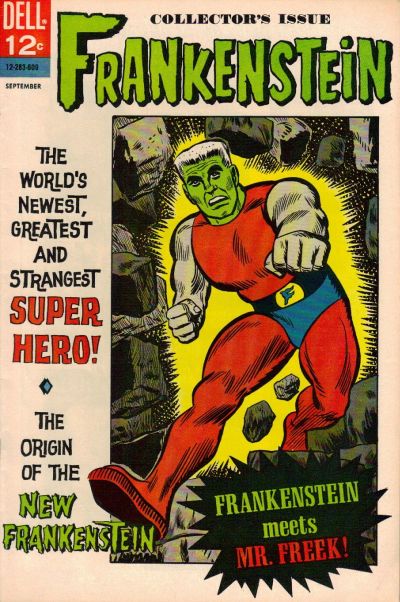
Dude, You’re Getting a Dell Frankenstein!

October 26th, 2009 Posted by Gavok

Covering Frankenstein is probably the best way for me to end the Dell Monster Trilogy, just because it is easily the best of the three comics. I realize that doesn’t mean much, and believe me, it doesn’t. It’s still pretty bad. It’s just that it’s the only one that feels like it could be a comic book worth reading.

Dracula was very loosely based on the source material and wasn’t quite as fun a concept as it could have been. Werewolf had literally nothing to do with its source material and despite the utter insanity of the story, was really boring for the most part. Frankenstein is the closest to the source and comes across as genuinely amusing for an old 60’s comic at points. It isn’t much, but it’s still the cream of the crop.

Like the other two, the creative team is believed to be Dan Segall and Tony Tallarico. Much like Dracula, Dell refers to the comic book adaptation of the Frankenstein movie that they released years earlier to be Frankenstein #1. The start of the superhero stuff is considered the second issue.

I can’t be the only one who sees Dell Frankenstein and thinks of Captain Murphy from Sealab 2021, can I? I kept hearing his voice for every one of Frankenstein’s word bubbles.

It begins promising enough with the shot of an abandoned castle that hasn’t been touched in about a century. We soon after find out that this is in America and that it’s only miles away from a major city (Metropole City), but at least the atmosphere is there. A huge bolt of lightning crashes through the roof and hits a slab below. On the slab is a body lying and dressed in red spandex with boots. For no reasons explained, his head is green-skinned and the rest of his body appears Caucasian. The bolt awakens him and he sits up, confused.

Read the rest of this entry �

h1

Maybe You Just Had to Be There

October 22nd, 2009 Posted by Gavok

Thunderbolts #137 came out this week, written by Rick Remender and drawn by Mahmud A. Asrar. It’s a decent issue, though it really reads more as Luke Cage and Iron Fist Featuring the Thunderbolts. I’m one of those who doesn’t have a problem with that idea, so bring it on.

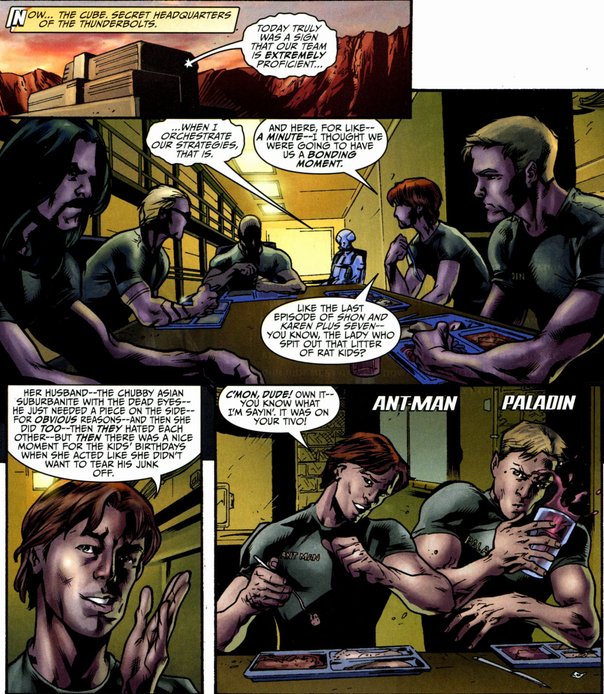
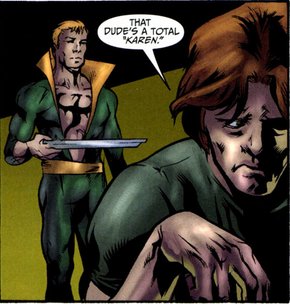
I bring this scene to your attention. Under the leadership of Ghost (who I like to think of as Earth-3 Rorschach), the team has successfully captured and brainwashed Iron Fist. Now they discuss matters over lunch.

The lack of tray in front of Ghost is some good continuity.

Anyway, the Irredeemable Ant-Man is thinly referencing the TV show Jon and Kate Plus Eight, starring Jon and Kate Gosselin. I’ve never seen the show for myself outside of the clips shown on The Soup, so I at least get the gist. Ant-Man’s description, while random to the situation, is still on point. Before the two announced their divorce, the show was about Kate being a total ice bitch 24/7 while Jon seems a step away from suicide. Apparently, people really like this.

I bring this up because while I don’t partake in the show, I have a loose connection to Kate Gosselin. About nine months ago, she did a book signing at the Barnes & Noble I work at. It was a really big deal and had a huge turnout. Thankfully, I was on vacation so I didn’t have to deal with it.

My co-workers, on the other hand, had many problems. From every single account, Kate Gosselin was a complete nightmare to deal with. She had them change the signing to a day later at the last minute, which caused us headaches and screwed with the customers who couldn’t be in the loop. She didn’t greet a single customer or employee throughout the night. She had no reaction towards the flowers we got for her. She refused any and all photos and would only sign either copies of her book or the first season of her show. She refused to make eye-contact with any of her fans, including a sick, little girl who was at the front of the line. She wanted to leave an hour early, even though she obviously wasn’t done. Like I said, a total nightmare to deal with.

The general consensus at the store was that Kate Gosselin is a bitch, but others would go far enough to straight-up refer to her as a cunt. Now, in the workplace, it’s hard to throw that word around safely, so we came up with a way to make it easier. From then on, we would retire the C-word and replace it with “Kate”.

“Then she got kicked right in the Kate.”

“That one customer who demanded to do a return without a receipt was acting like such a Kate.”

“Jeff Goldblum’s first line in any movie is Deathwish, where he says, ‘Goddamn rich Kates! I KILL RICH KATES!'”

You’d… You’d be surprised how much that last one comes up…

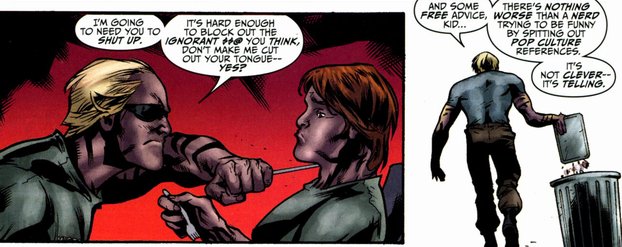
Now, then. Let’s go back to Thunderbolts as Mr. X gets in Ant-Man’s face. Makes sense for Mr. X to be angry, considering Remender nearly ruins him completely in one issue.

Haha! See? Art is imitating life. I love it.

h1

Dollhouse Reveals New Miracle Cure: Punch-in-the-Face

October 21st, 2009 Posted by Esther Inglis-Arkell

Say what you want about Dollhouse, it makes a compelling case for giving Bruce Lee the Nobel Prize for Medicine posthumously.  There is very little in the human body, mind, or soul that this series hasn’t cured with a good hit to the brain-pan. 

First of all, any soon-to-be parents can throw out those namby-pamby parenting manuals that tell them to spare the rod.  In the pilot, the ‘hero’ of the series is introduced via boxing montage.  As he is pummelled mercilessly, his fight is intersperced with scenes of his superiors telling him to back off investigating the Dollhouse.  After he is beaten to the ground, he gets up to fight once more!  That’s right.  You can smack determination into your kids.  Do it early.  Do it often.

Of course, this might get them feeling a little down.  No problem.  You know what cures suicidal tendencies?  A hit with a chair.  Yes, in episode three, a suicidal pop star is ‘cured’ of her tendencies by being cracked with a folding chair, wrestlemania-style.  No, I’m not kidding.  It wasn’t subtext.  It wasn’t a post hoc, ergo propter hoc situation.  They actually said, on the show, that a ‘brush with death’ helped reignite her desire to live.

But those are just mental conditions, right?  Mental problems are cured in all kinds of strange ways.  Physical problems, however, well – they take something a little more specialized.

Or not.  Four episodes into the series, an evangelical preacher actually beats the blindness out of the main character.  All right, so he only dislodged a chip in her head, allowing her to see.  That, however, was just an open-handed slap.  Imagine what a fist could do.

We only get to see that miracle cure in season two, but let me tell you, readers, it was worth the wait.  In the first episode of season two, we see the boxing-ring hero call on all of his experience and actually beat martial arts ability into the heroine.  On the way, he probably went through the ability to horseback ride, speak other languages, and work as a trained nurse, because she was glitching between multiple personalities until she was smacked into one who could kill all the arms dealers who were surrounding the both of them.

Regardless of the situation, I think that Dollhouse has showed us the way to true health.  Forget vegetables and meditation.  Find yourself a wall and whack it with your head.  You’ll thank me when you’re a ninja.

h1

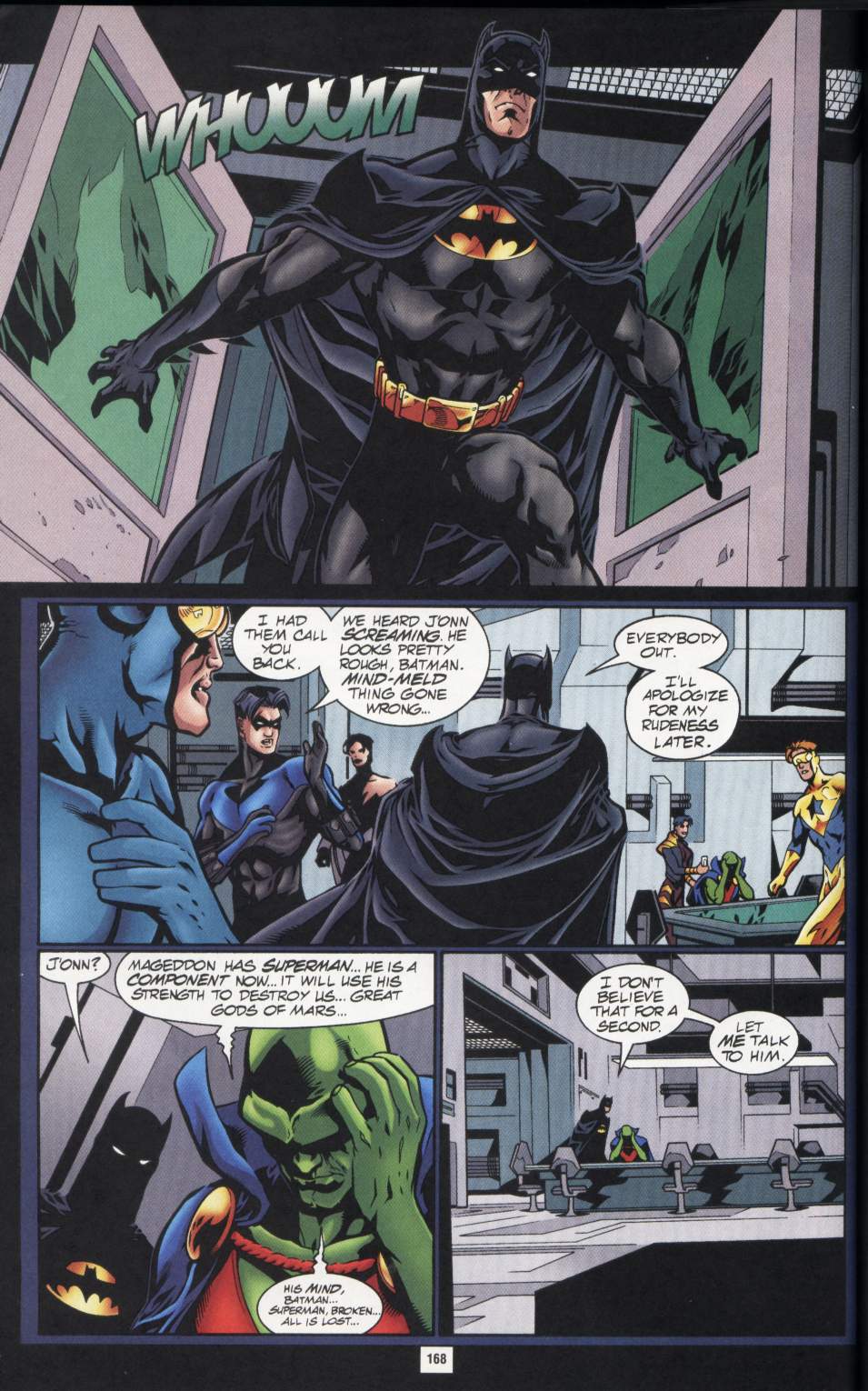
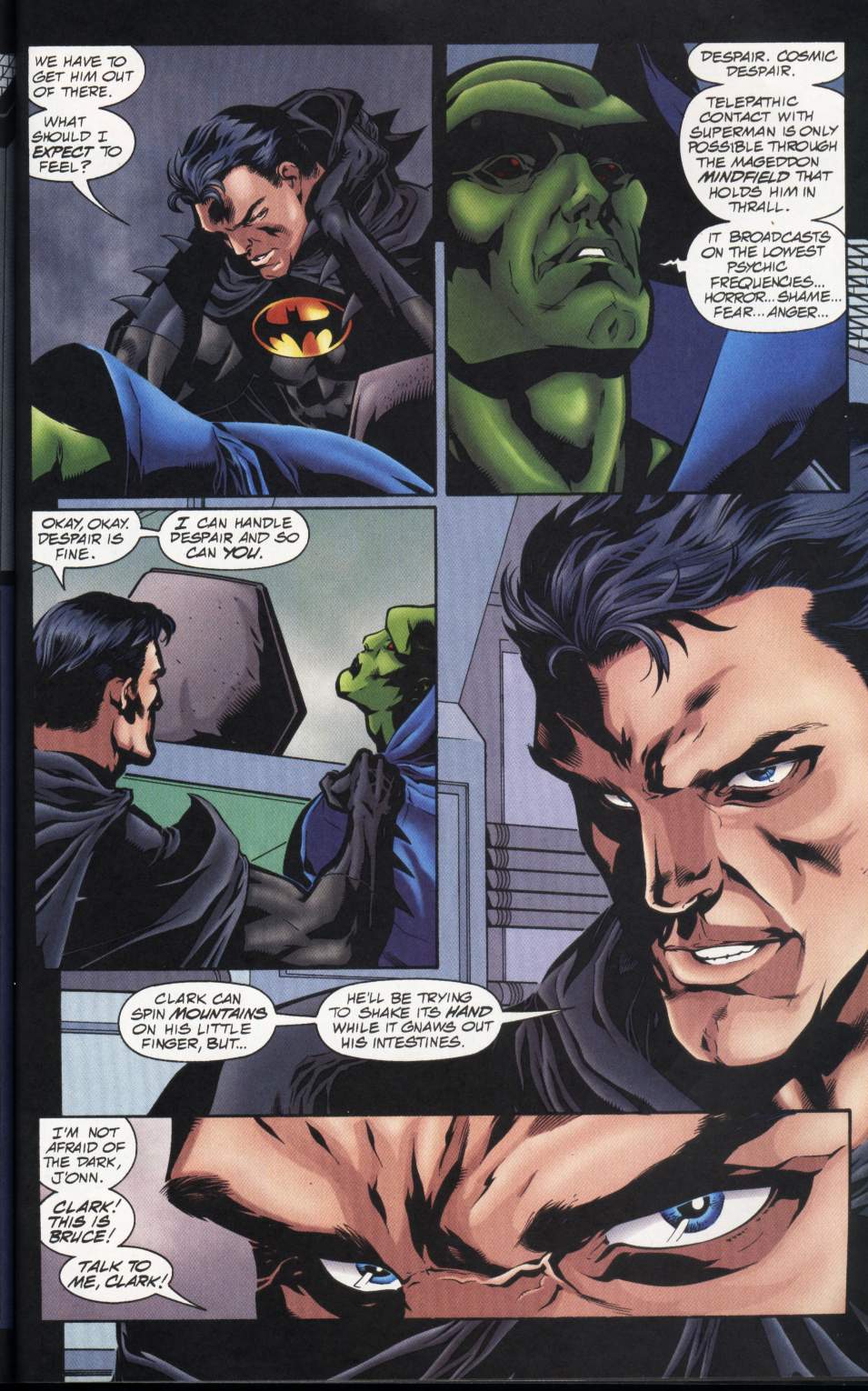
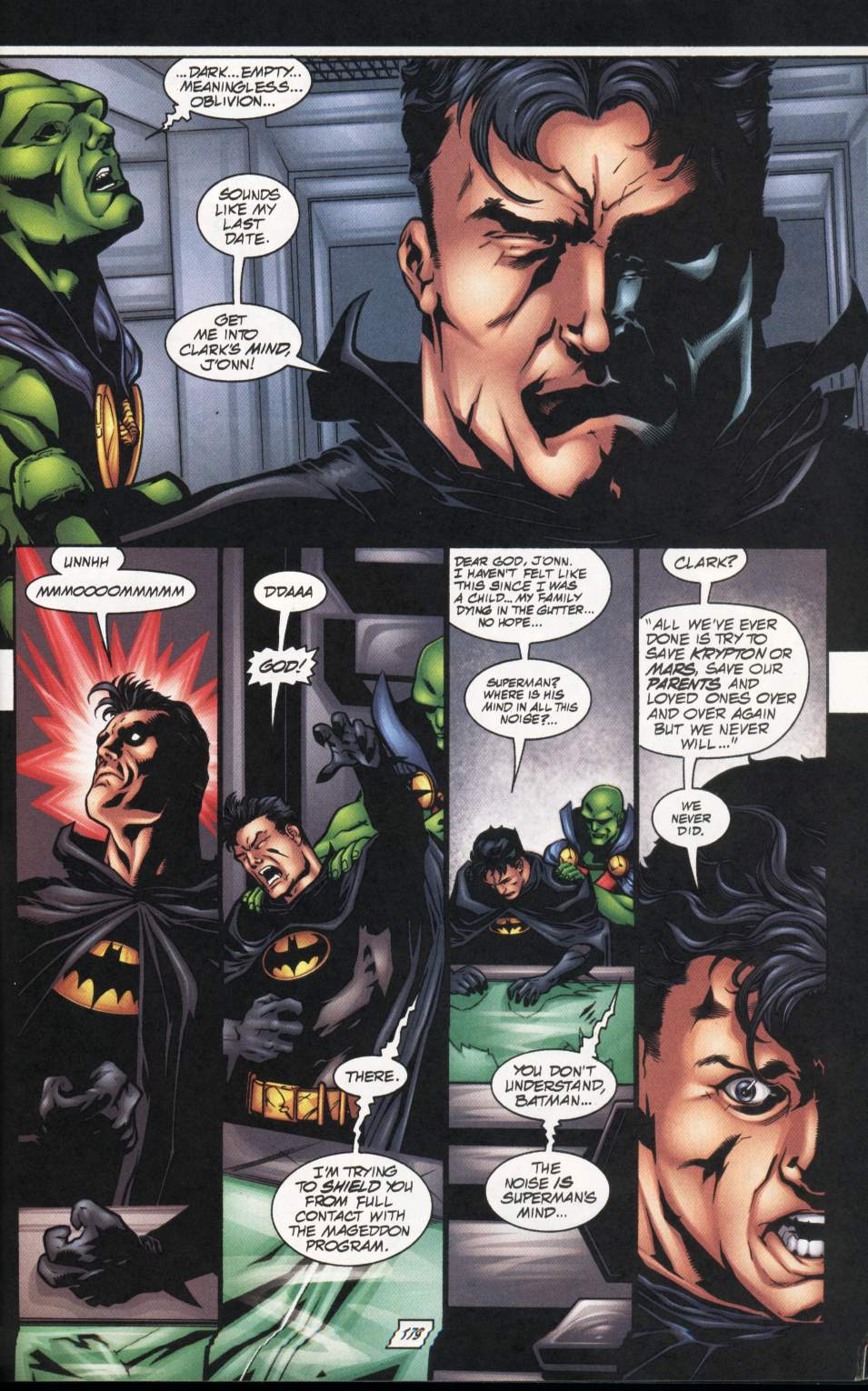
“Despair is fine.”

October 19th, 2009 Posted by david brothers

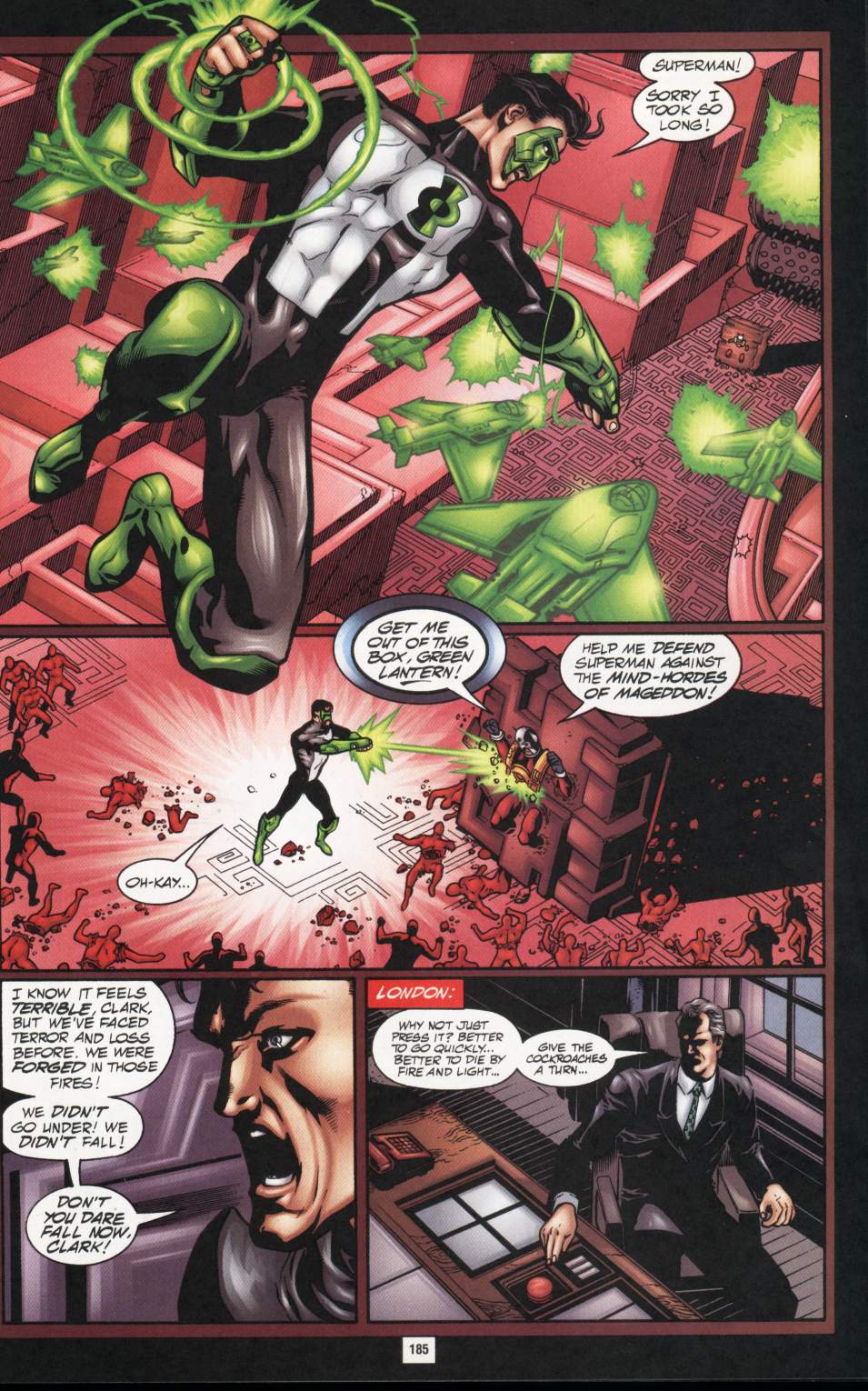
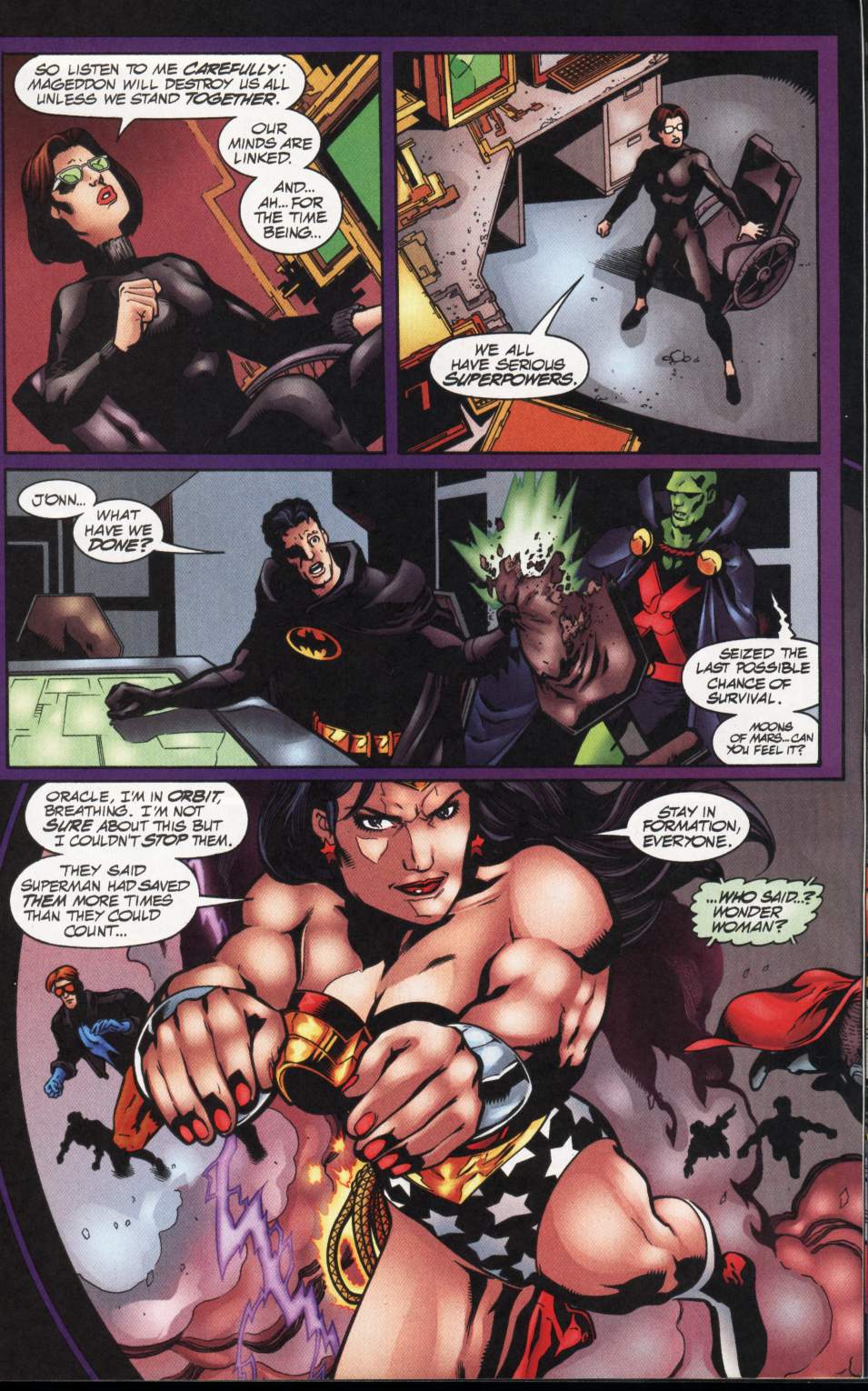
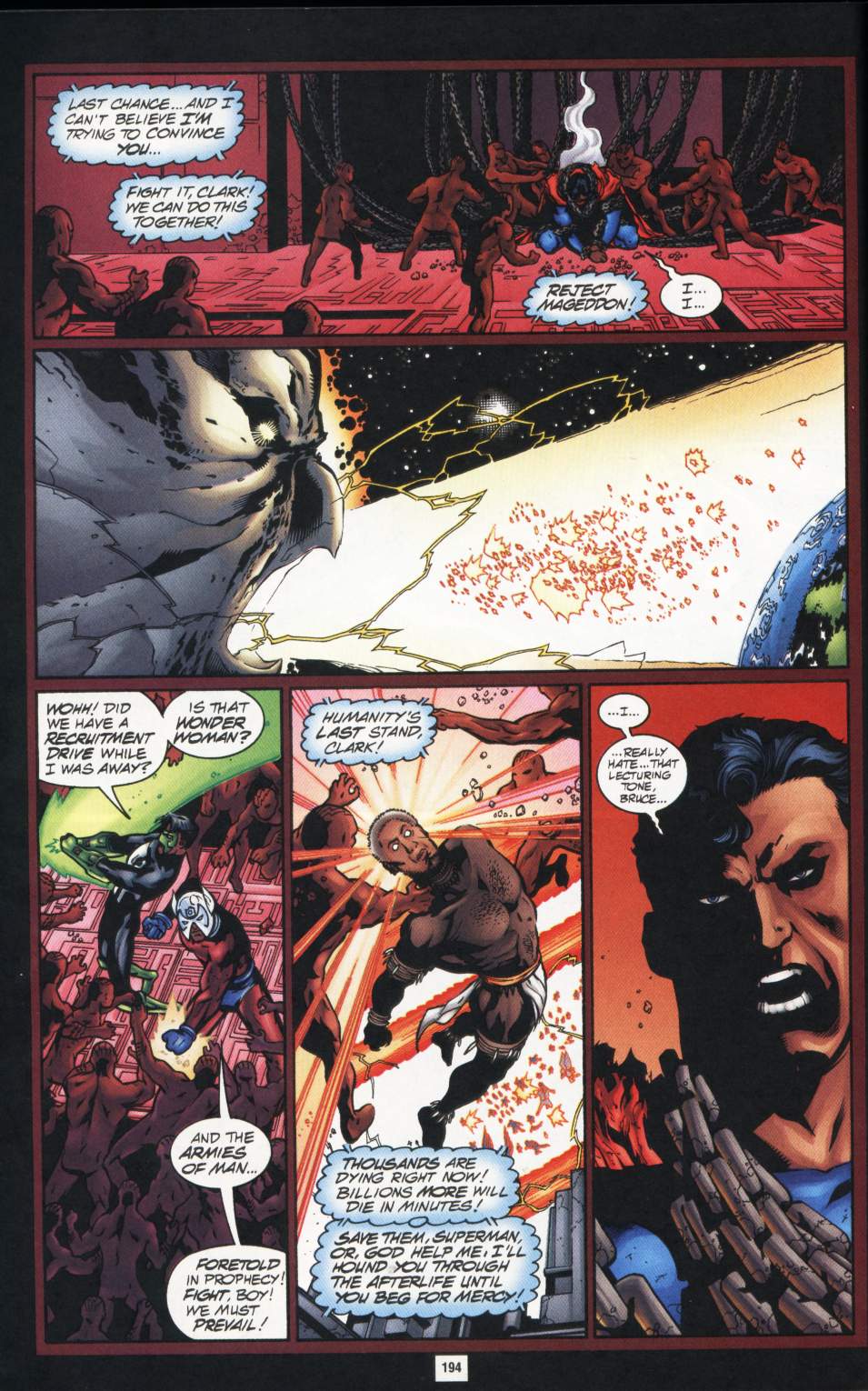
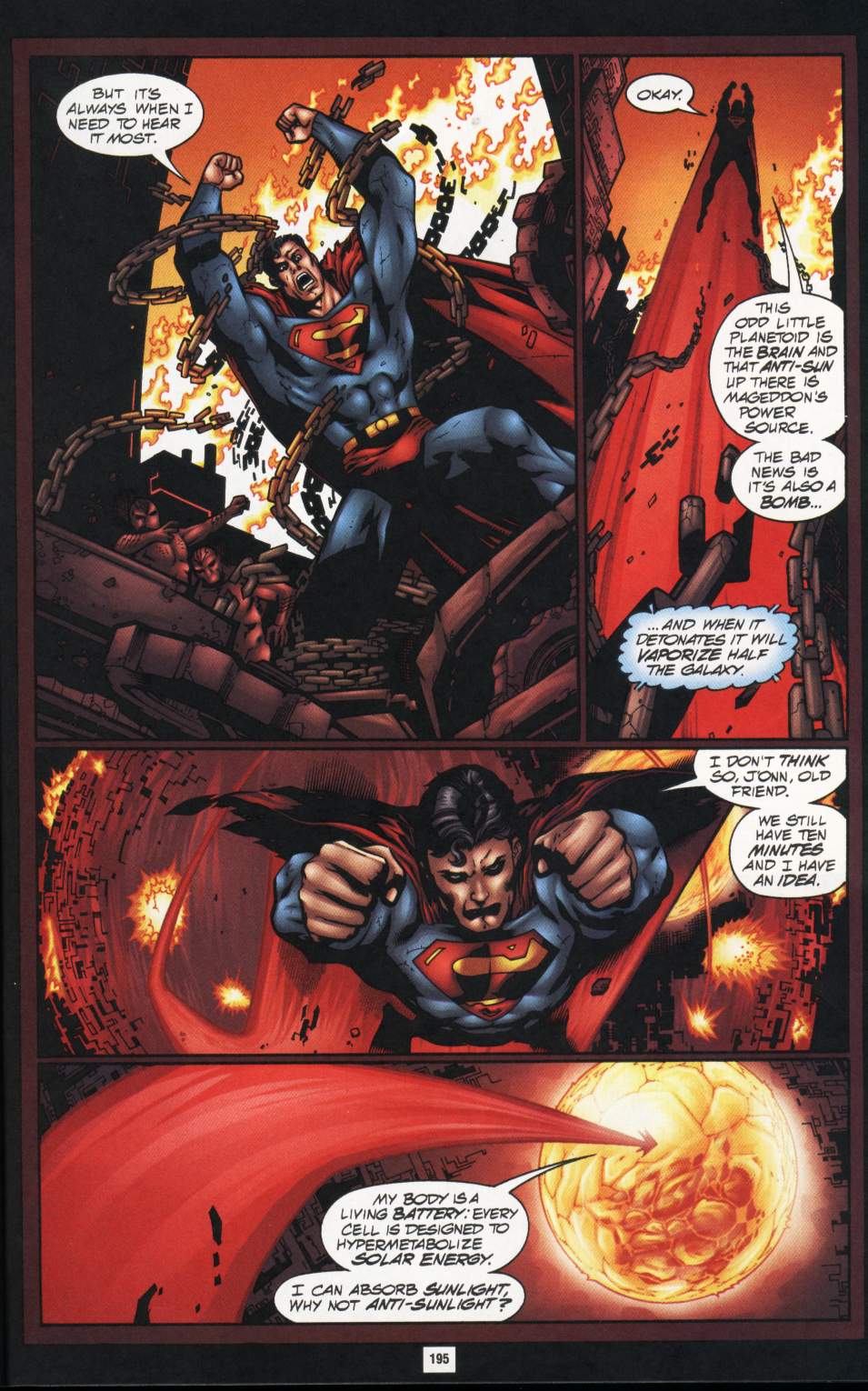
Remember when JLA was a good comic book? Me too. Exhibit A:

ww3_01ww3_02ww3_03
ww3_04ww3_05ww3_06
ww3_07ww3_08ww3_09
ww3_10ww3_11
words by grant morrison, art by howard porter

h1

Ideals and Identification

October 19th, 2009 Posted by Esther Inglis-Arkell

I was thinking today about Diana and Stephanie, the two female characters whose comics I buy.  Diana, Wonder Woman, is perfect.  The embodiment of compassion, strength, honor, bravery, and beauty, she’s a princess and a warrior and an ambassador.  Despite her iconic status, and the fact that she’s had an ongoing comic for the better part of a century, female fan interest in her has only recently heated up – due to Gail Simone’s decision to write her comic.

Stephanie, Spoiler/Robin/Batgirl/Who’sNext?, is decidedly not perfect.  A perpetual screw-up, she’s earned both my and general female fandom’s accolades by picking herself up, dusting herself off, and starting all over again.  It’s possible that her moment of greatest popularity was after her death.

While it’s normal for fans of any gender to decry a comics character’s death while pretty much ignoring their life, I wonder if something extra is at work, here, especially when I think of other media.  Most TV shows and movies about female characters are about the adorable main character trying to get her life together.  She’s clumsy, and awkward, but tries so hard.

And she’s at war, usually, with the ultra-perfect glamazon who is after her job/man/scholarship/position in society/what’s next?  I hate that dynamic because it has always been, in my experience, false.   What’s more, it embraces the values it supposedly abhors.  Whether it favors the popular girl or the outsider (And who are we kidding?  Like any show, book or movie in the last fifty years hasn’t sung the praises of the noble outsider), it still villifies one segment of the population for, basically, having different values, tastes or interests.  Still, I wonder if, no matter how I resist it, it’s at work in me, or at work in many women.

While media that sings the praises of the powerful man (The Sopranos, The Tudors, Kings, etc.), the brilliant man (Law & Order: Criminal Intent, CSI Miami, House, Monk), or simply the eccenric or egotistical man (Dexter, House again, Nip/Tuck) do well, women are always given a heroine they can relate to not one that they feel they have to compete with, and certainly not one they feel they’d lose out to.

Even in shows like Buffy the Vampire Slayer, the heroine is usual beset with troubles and struggling, instead of blowing everyone away with her strength and brilliance.  Buffy, the mystical chosen one, is always one step away from getting kicked out of school.  House, the doctor who can’t be assed to restrain his own bad behavior, finds out that his supervisor has budgeted in lawsuit money for the various patients who sue him because he is just that good.

Is this about what’s offered to women?  Is it about what’s taught?  (Tina Fey’s movie, Mean Girls, was hailed as an insightful satire about teenage girls.  It had a group called ‘The Plastics’.  We never had groups like that in my school, but how many movies can you watch before you develop an attitude of ‘it’s us versus them’.)  Is it just my lopsided view of pop-culture?

In the end, girls and women are given many examples of heroines about winning out when odds are against them (just as men are) but relatively few examples of just plain winners.

h1

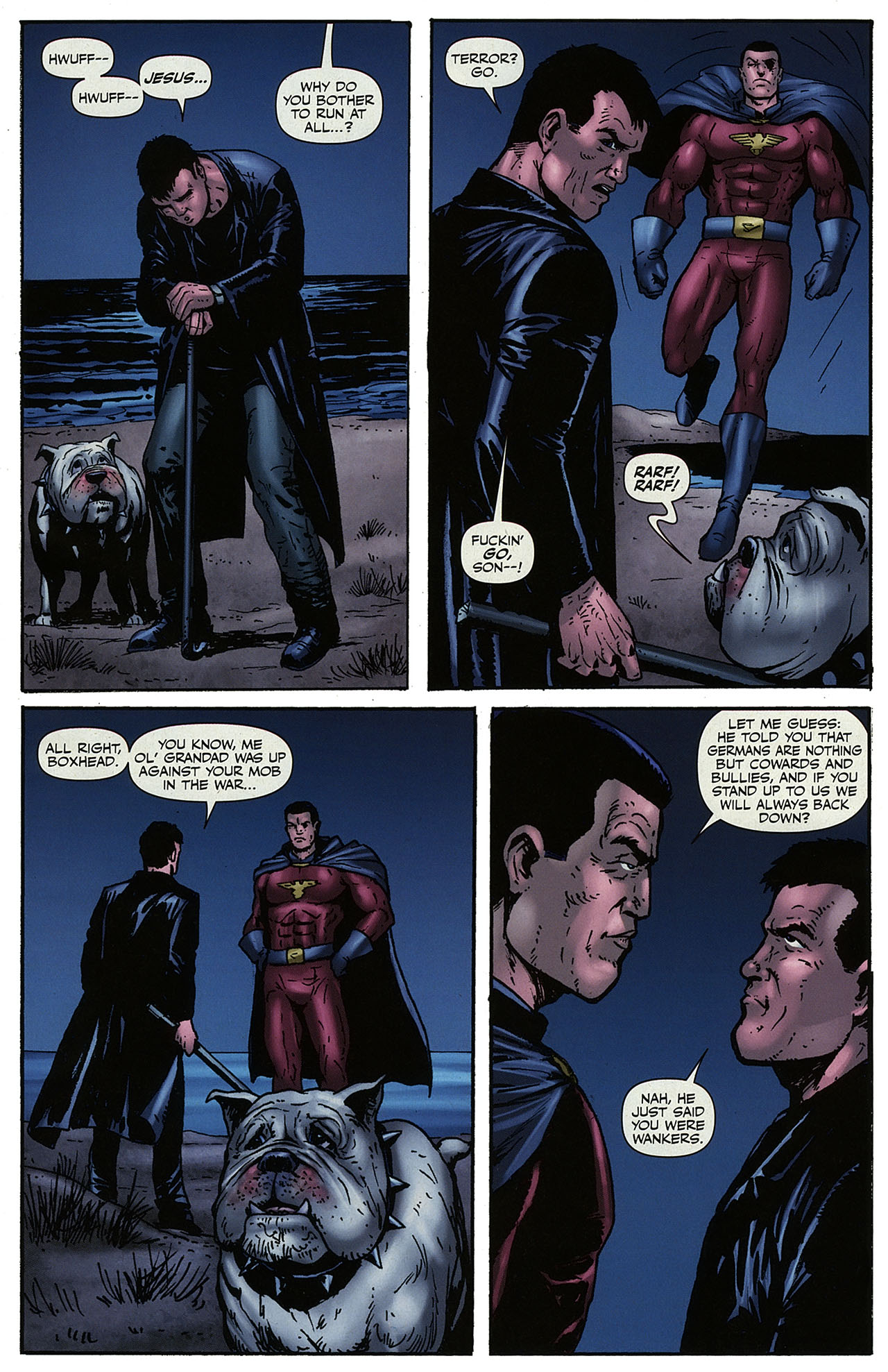
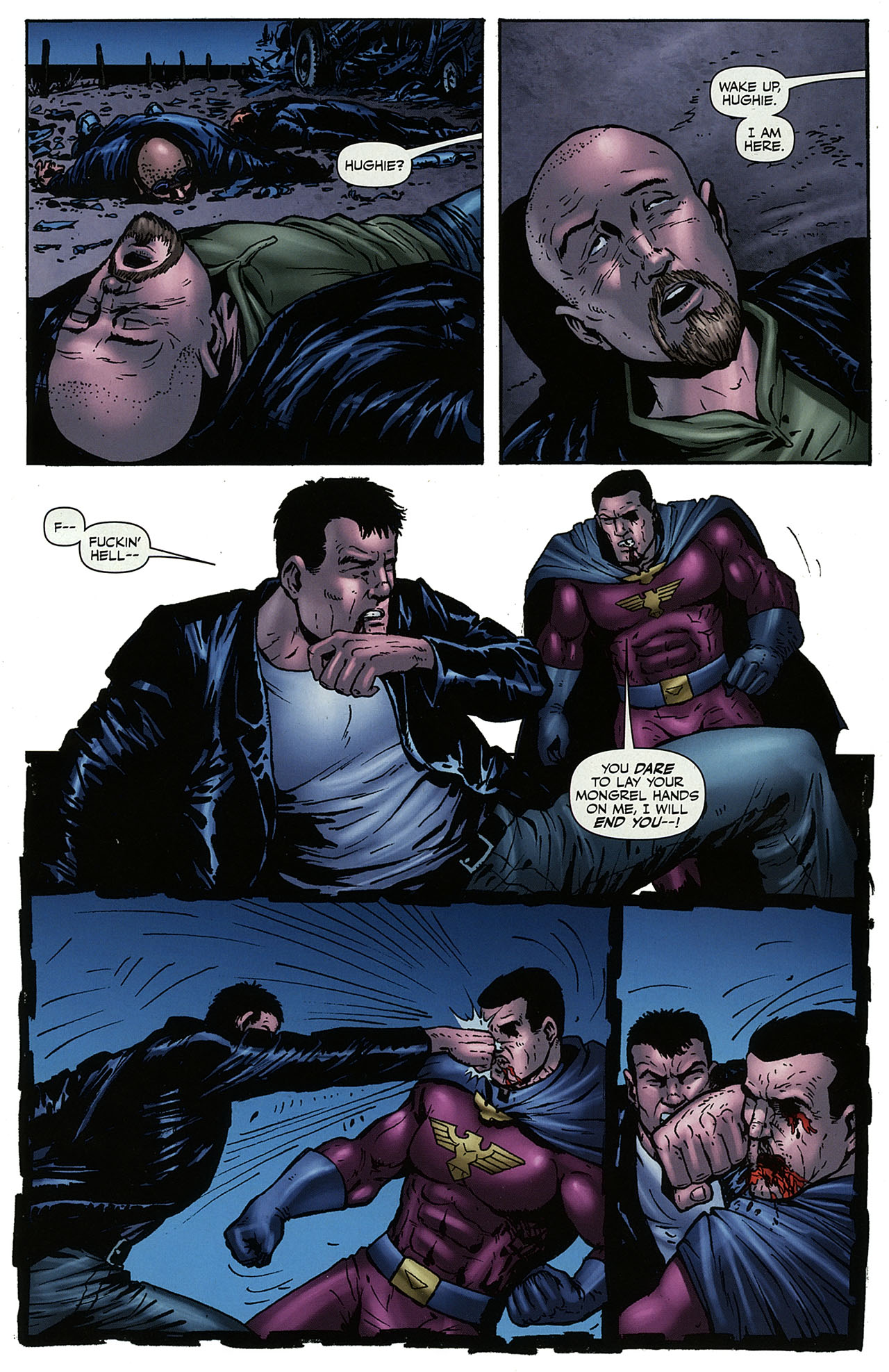
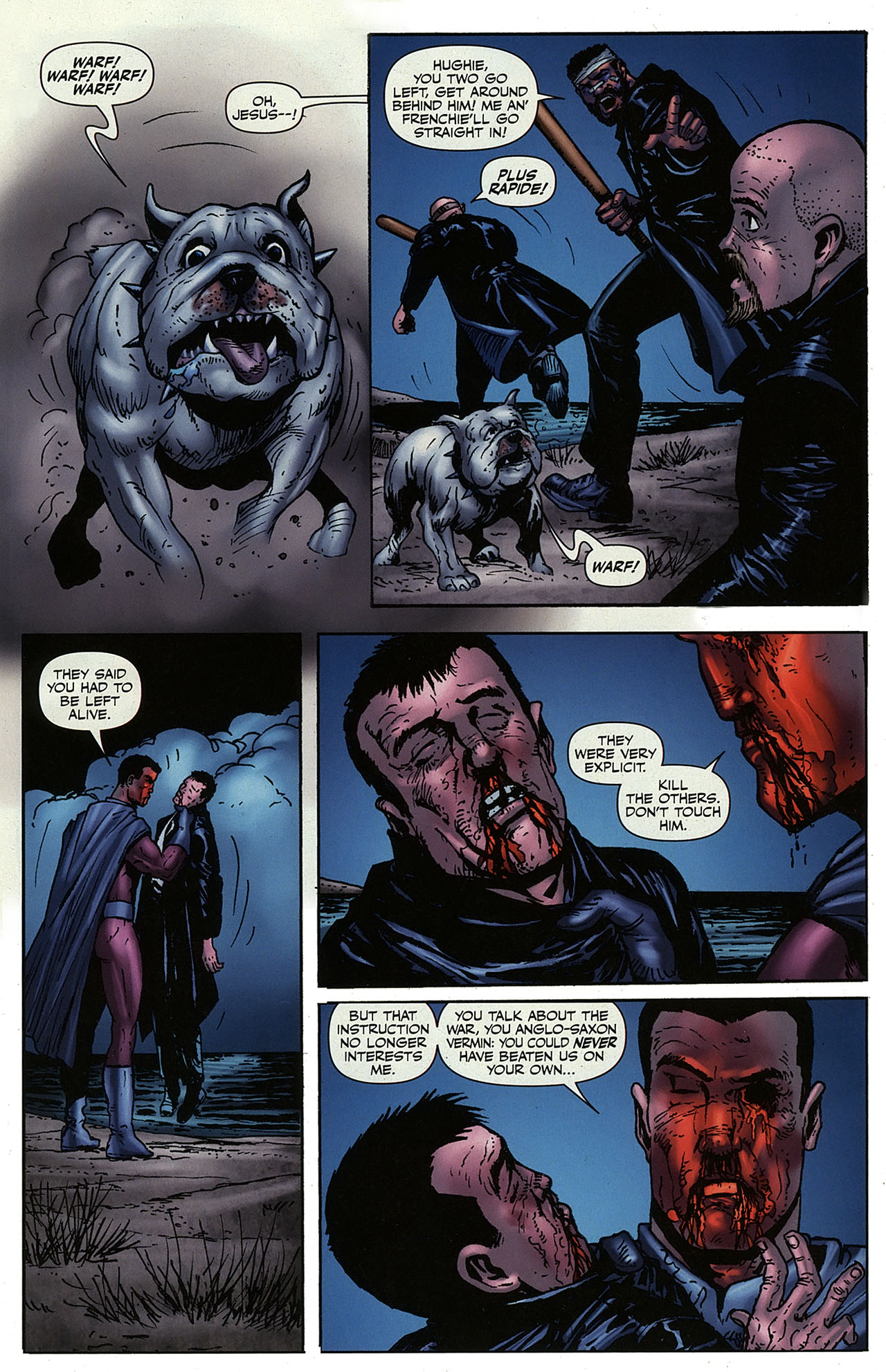
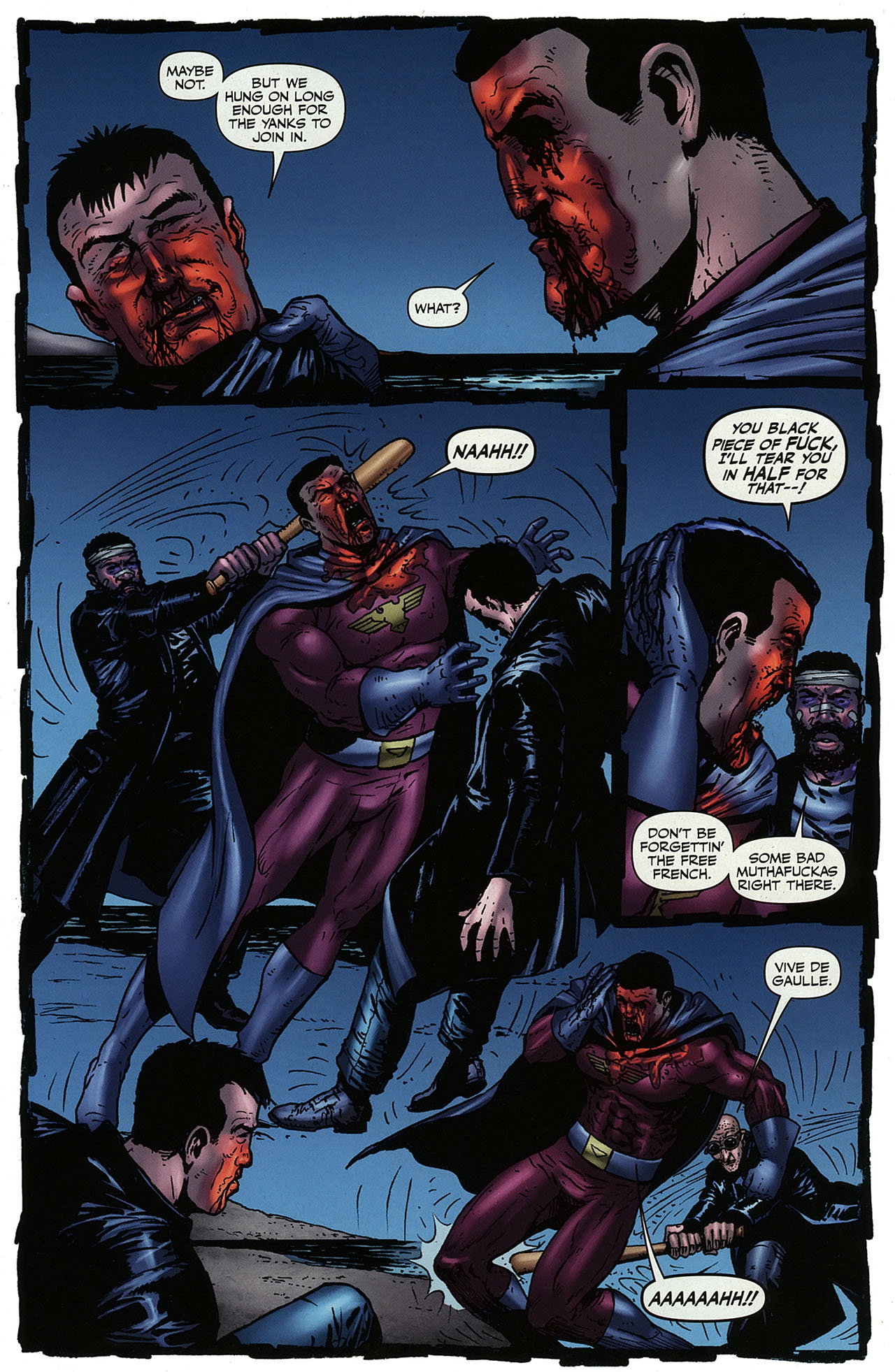
“Don’t be forgettin’ the Free French.”

October 16th, 2009 Posted by david brothers

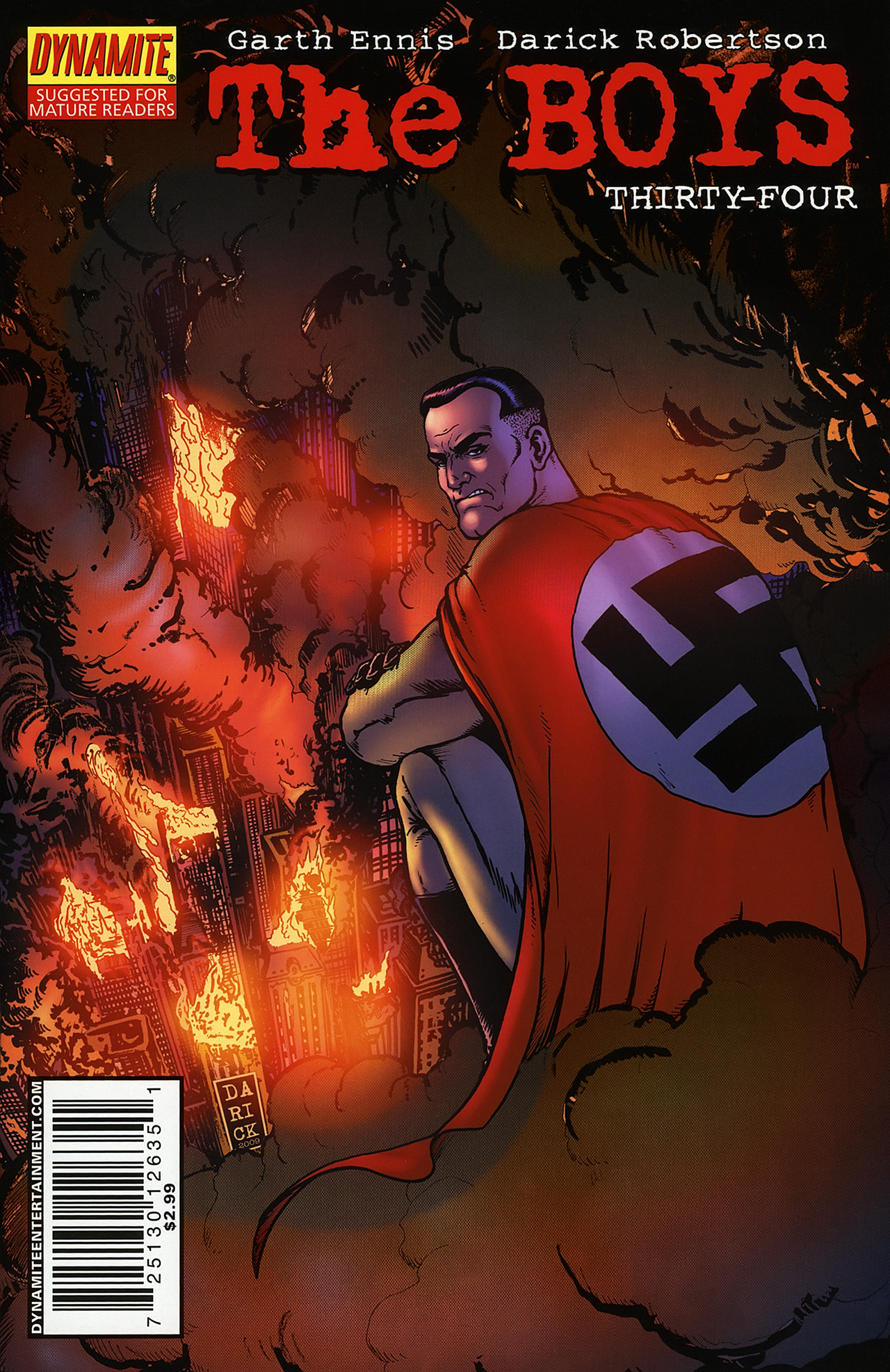
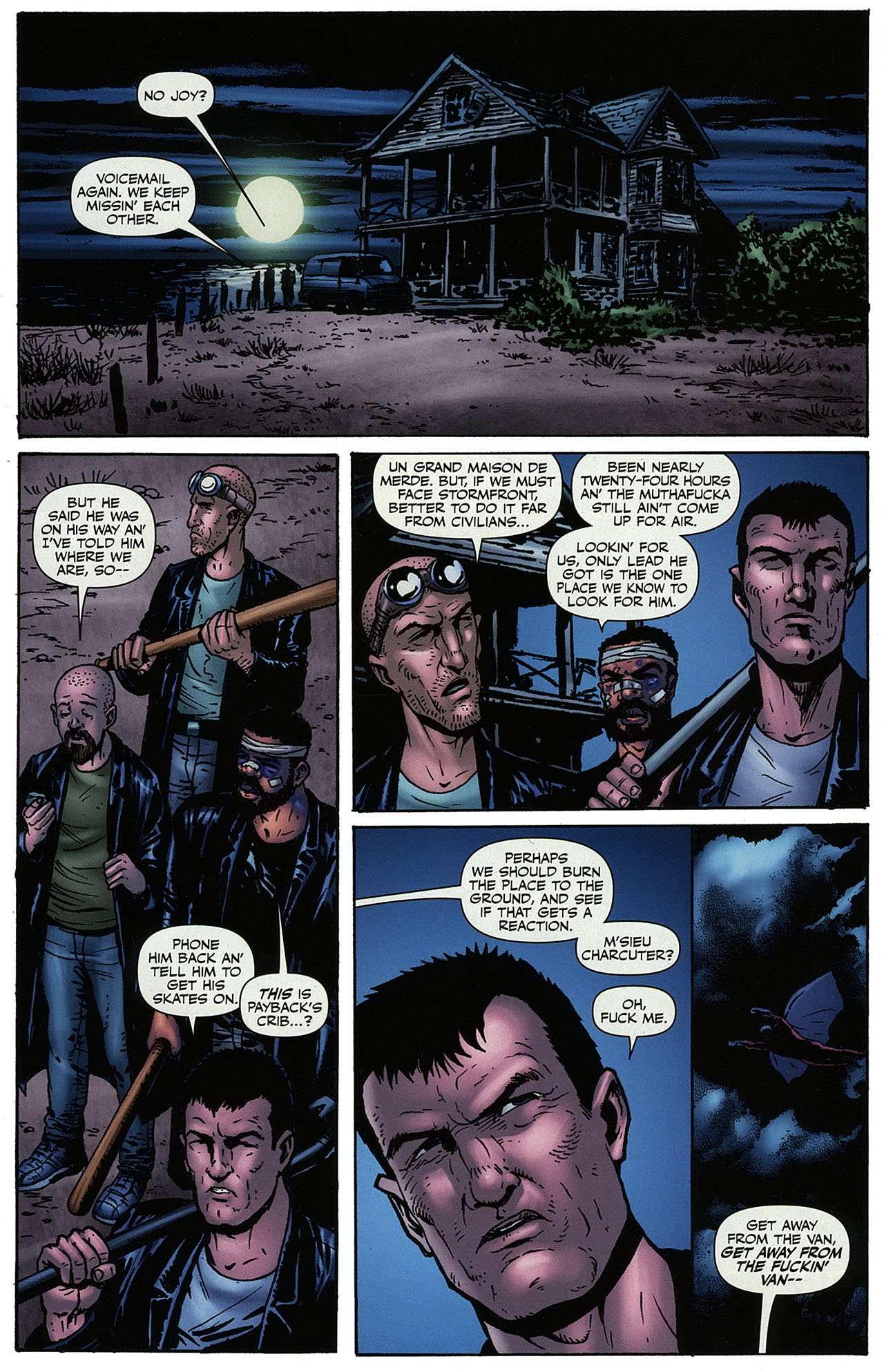
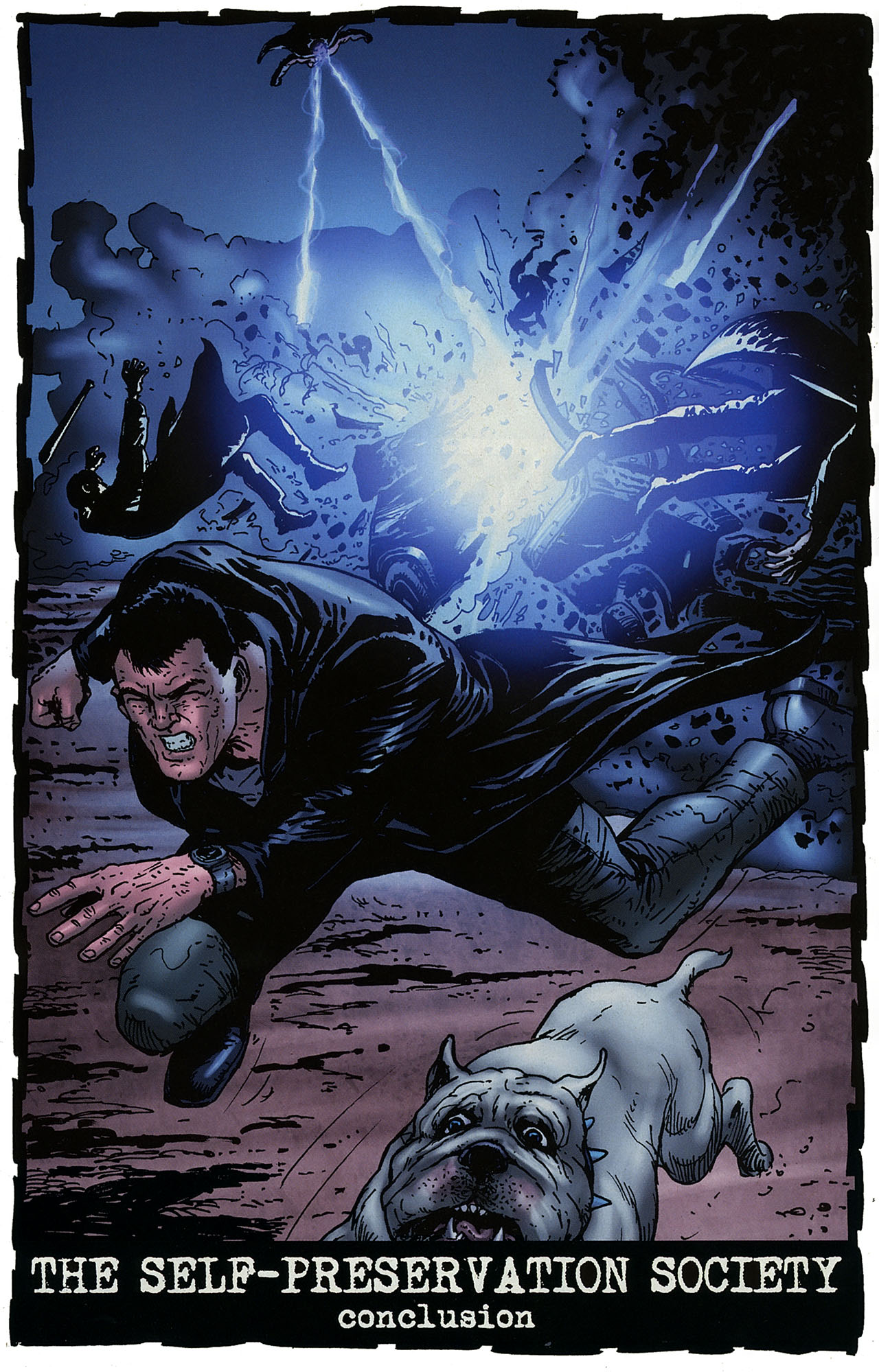
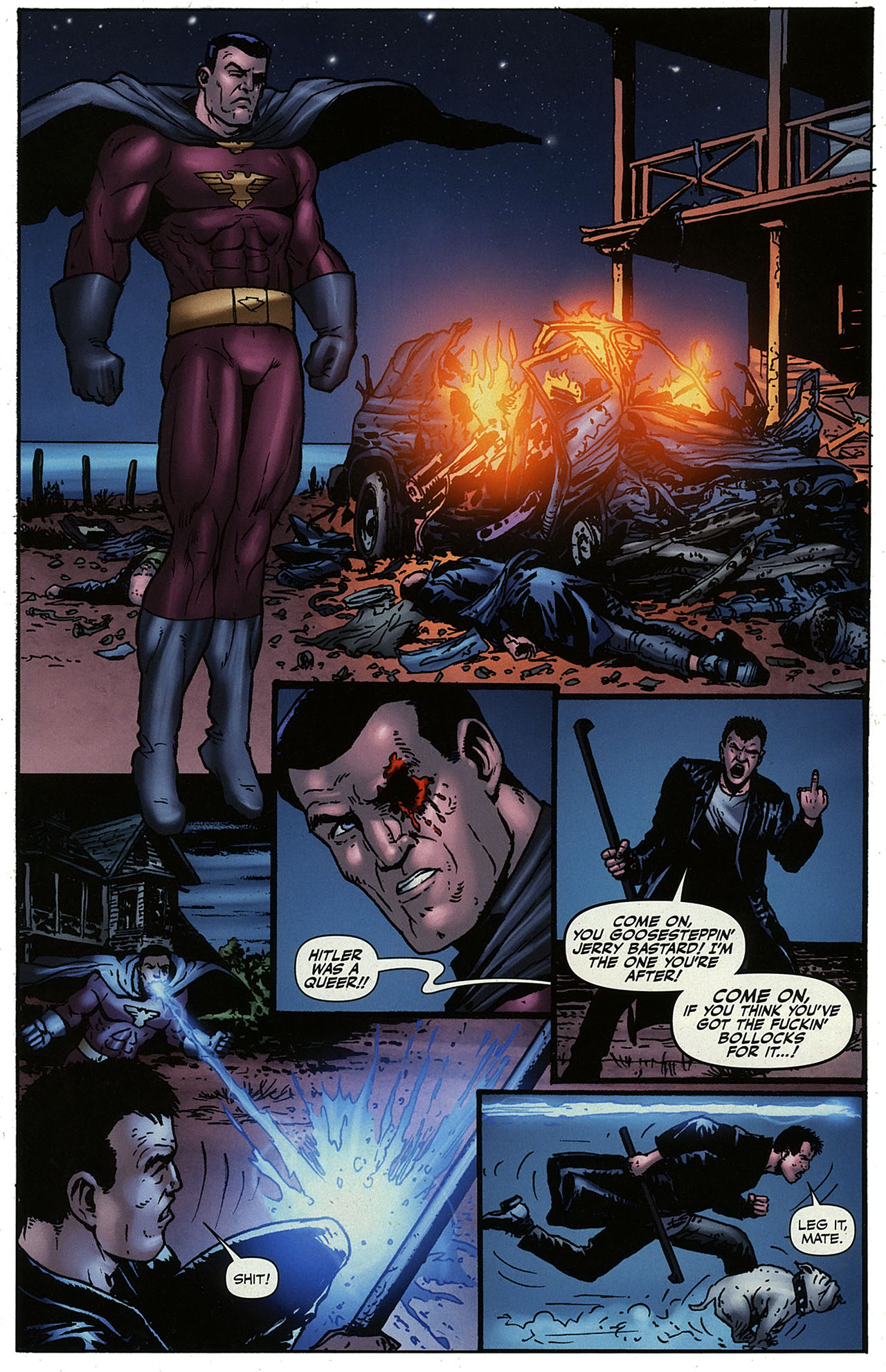
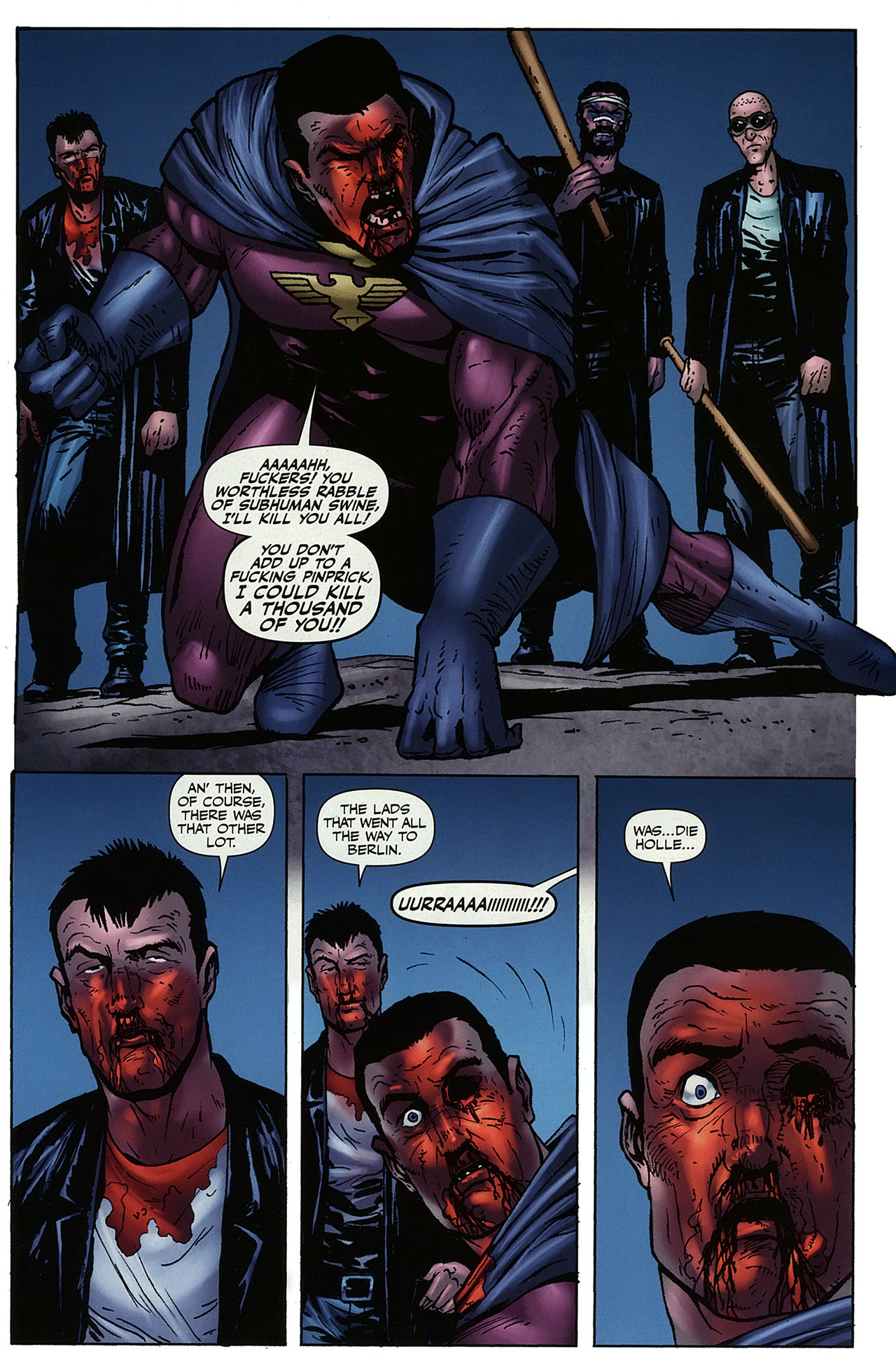
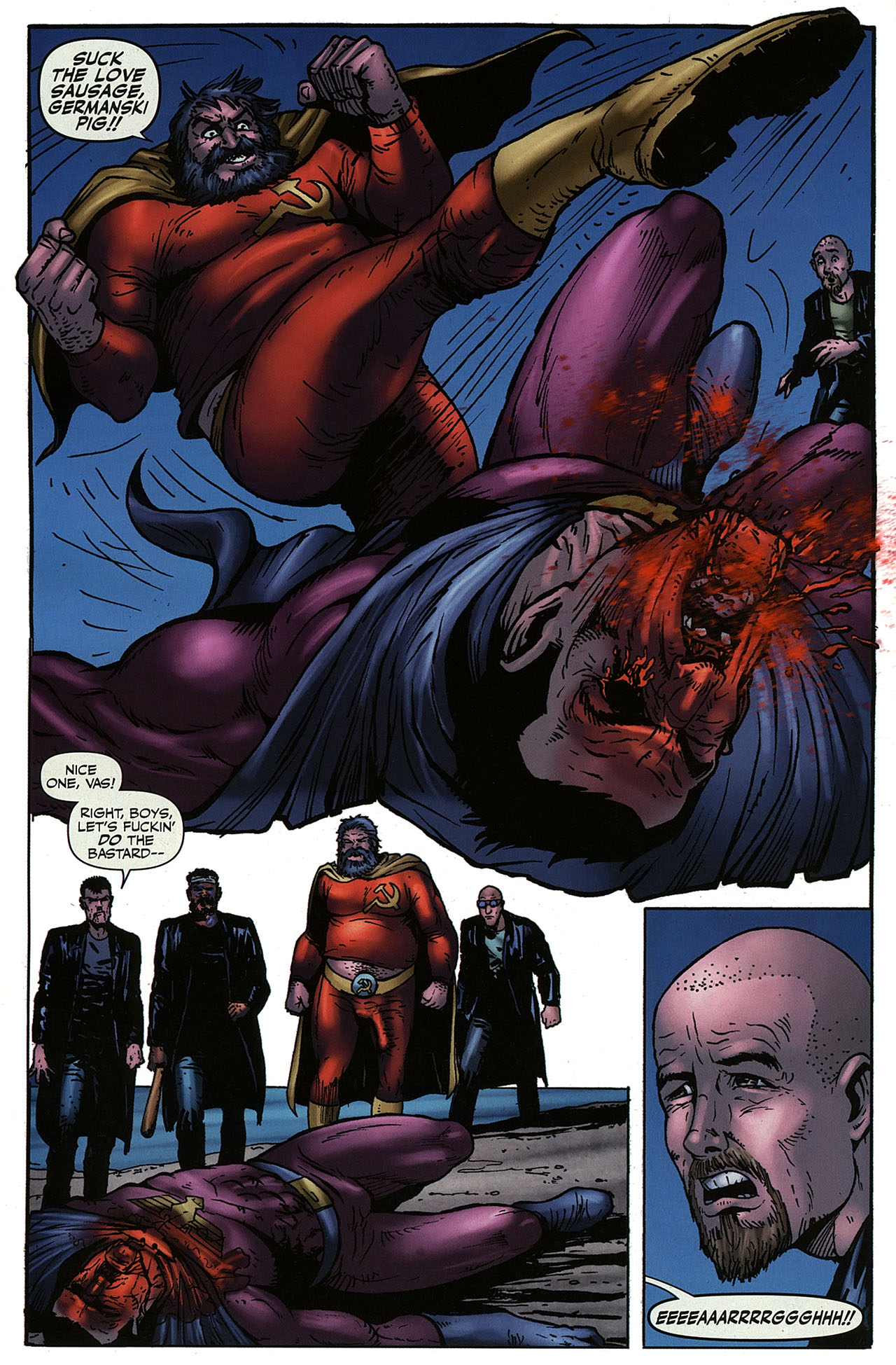
Blogging’s going to be light today since work and other things have occupied my time lately, but I did want to share this sequence from (the as-yet uncollected) The Boys #34. Garth Ennis and Carlos Ezquerra came up with a pretty good (and brutal) way to use World War II in a superhero book. I usually like my World War II pure, but this? This is clever. I snipped a few pages out, but this is still followable. And if you can’t tell by the cover, you probably shouldn’t be clicking this at work.

the_boys_34_001
the_boys_34_003the_boys_34_004the_boys_34_005
the_boys_34_007the_boys_34_009the_boys_34_011
the_boys_34_012the_boys_34_013the_boys_34_014

Dynamite needs to drop this trade asap.

h1

Making Navigation Just a Little Easier

October 15th, 2009 Posted by Gavok

I understand that the layout of this site kind of sucks when you’re looking to read through a series of something. Sure, you can click one of the tags, but then you have to sort through it all backwards. That’s no fun. That, and it takes me forever to update the Contents page.

If you notice on the right side, under “Pages”, there are two new links: 4th Letter Masterworks: Ultimate Edit (includes Ultimatum Edit) and We Care a Lot: A Venom Retrospective. These are links to both article series in their entirety, with paragraph descriptions for the Venom stuff. Hopefully this will make things easier for fans of the respective articles. Plus it’s better for those of you who like to spread the links around. Hint hint.

You may notice the title of the latest We Care a Lot article as “The Sammy Hagar of Cannibalism”. I feel the need to expand on this.

Venom symbiote = Van Halen
Eddie Brock = David Lee Roth
Mac Gargan = Sammy Hagar
Angelo Fortunato = Gary Cherone

See? Fits like a glove.

And just a reminder, if you have the Facebook, check us out!

h1

Batgirl #3 Play-by-Play

October 14th, 2009 Posted by Esther Inglis-Arkell

There is hope, friends!  I have read the comic and there is hope!

Read the rest of this entry �