Archive for the 'comic books' Category

h1

Trying to say nice things today…

November 11th, 2009 Posted by david brothers

so I’ll just let y’all judge these quotes from IGN’s The Final Days of Dark Reign interview with Brian Michael Bendis and Brian Reed yourselves:

On Ms. Marvel’s identity crisis

Bendis: “Carol Danvers is awesome. She’s another character where there’s a lot going on in her own series. But she’s in every single issue I’ve written over the last six months, so there’s a lot going on with her. But what’s interesting is if Moonstone is sleeping with all of the Dark Avengers, they might not realize later which Ms. Marvel they had been sleeping with, and there might be trouble down the line.”

On Moonstone’s secret weapon

Bendis: “Now Moonstone I’ll probably get some letters on. She’s going to be using sex as a weapon, not because that’s what I feel women do, but because that’s what I feel this mentally ill woman would do in close quarters. She started with Marvel Boy and will begin making her way through the team.”

h1

Teenage Mutant Ninja Turtles Forever

November 10th, 2009 Posted by david brothers

’nuff said.

h1

The Undertaker Comic Part 2: Brothers (and Sister) of Destruction

November 9th, 2009 Posted by Gavok

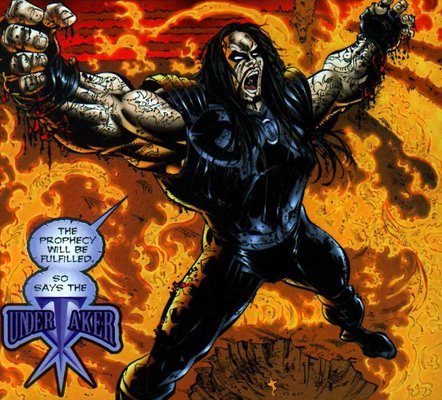
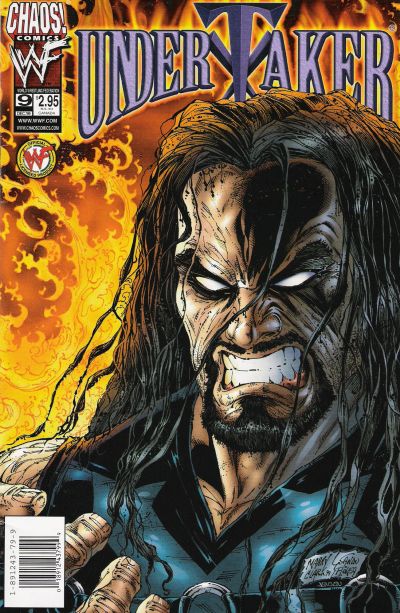
Last time, I discussed the first few issues of Chaos Comics’ Undertaker, as well as the specials that came from it. The Undertaker, Paul Bearer and a newly-created character the Embalmer each hold a Book of the Dead and are going to war over who can get all three Books and become the ruler of Stygian, Hell’s prison. Meanwhile, Kane is sneaking around, watching the Undertaker and Mankind is able to see that some of the wrestlers in the WWF are really demons in disguise.

Just for shits and giggles, for those of you reading who don’t follow wrestling or haven’t followed it for long, here’s a list of some of the Undertaker’s silliest storylines:

– Fought a nearly 8-foot-tall dude who wore a muscle suit with fur covering the shoulders and crotch. Their “epic” battle at Wrestlemania 9 ended with this big dude, Giant Gonzales, chloroforming the Undertaker. This got Undertaker a win via disqualification and they always have to sidestep this fact when they go over how the Undertaker is undefeated at Wrestlemania and show a highlight reel.

– A match was set for Survivor Series of Lex Luger and his patriotic American guys vs. Yokozuna and his evil foreigners. Due to a last-minute injury, they needed someone to step into Luger’s team. This spot was filled by the Undertaker, who proceeded to do a lengthy promo that compared his gimmick to what America is all about. He ended it by growling, “Let freedom RIIIIIIIING…” and opened up his jacket to reveal a 1776 American flag stitched on the inside. Lex Luger saw this and got way too pumped about it.

– Undertaker had a match against Yokozuna where you won by stuffing your opponent into a casket. Just about every bad guy in the WWF came out to help Yokozuna by ganging up on the Undertaker and shoving him in the casket. As the casket is wheeled away, the big screen above the entrance shows a camera inside the casket, where the Undertaker promises he will return. Then he (or Marty Janetty in an Undertaker costume) flies off into the heavens on strings.

– The Undertaker delivered a Dominos pizza to Leslie Neilson as part of the lead up for the Undertaker to fight his evil doppelganger.

– The Undertaker had a rematch against Yokozuna, this time with Chuck Norris there to make sure nobody interfered this time.

I can go on with this for days. To be fair, I do really love the Undertaker and he has had his share of kickass moments. Like that time Paul Bearer did an interview from the safety of his own home and Undertaker burst in, yelling, “Did you think I forgot where you live?!” and pummeled the everloving hell out of him. Then it cut to the arena’s locker room, many miles away as Kane went into a hysteric crying rampage and Mankind had to try and calm him down. That was neat.

Read the rest of this entry �

h1

Raising a Comics Company Right.

November 9th, 2009 Posted by Esther Inglis-Arkell

Let’s say you’re reading the editorial on a comic, or an interview with a comics professional, or maybe just scanning the solicits for upcoming comics, and you see something that seems a little off.

Something a little inappropriate; both gruesome and coy.  Something that hints at terrible, momentous events but is played off as a detail. 

Something, in other words, that is guaranteed to get the serious and touchy fans burning up their keyboards.  And that is, kind of, the point.  (Or part of it.  The other part is the fact that comics professionals don’t take comics quite as seriously as fans – and a good thing, too, considering many of them work in close proximity and have sharpened pencils on hand.)  Interviews and editorials are meant to garner publicity, and unhappiness usually shouts louder than contentment.  Especially on the internet.

That’s where you get to the problem with shouting your unhappiness with this prospective storyline; it’s kind of like giving a kid a candy bar every time they throw a tantrum.  In time you will end up with a toothless, tantrum-prone child and a shortage of snicker bars and an alcohol problem.  I may be stretching the metaphor.

My point is, though, how does one criticize a company’s choices in a business where almost any publicity is good publicity?  Because the only way I can see turning these things to my advantage is telling you guys that clicking the ads on this site registers a formal complaint.

h1

Grant Morrison Ruined the X-Men

November 6th, 2009 Posted by david brothers

Grant Morrison ruined the X-Men when he wrote New X-Men.

No, really, it’s true. Look at Marvel’s moves after he left the book. The very first thing they did was launch X-Men: Reload, a branding and soft-relaunch initiative that saw Chris Claremont put on Uncanny X-Men, Chuck Austen placed on the last two issues of New X-Men (where he cleaned up plots that were already perfectly clean), and Joss Whedon hired to write what turned out to be one long love letter to the glory days of Claremont/Byrne Uncanny X-Men.

Later, they reduced the total number of mutants to the low three figures, a huge change from Morrison’s population of millions.

Morrison pulled the X-Men into the modern day, not even the future, and Marvel’s move after he left was to immediately dial things back to 1982. It’s a baffling decision, and one that’s hamstrung the X-Men ever since. Whedon’s run went from mildly entertaining to stone cold stupid with a quickness (Space bullet, Professor Xavier in a truck, too-cute dialogue, pretty much everything after issue 12, though granted John Cassaday was awesome throughout), no one remembers Claremont’s run despite the Alan Davis art, Peter Milligan’s run was a non-starter, Brubaker was a tremendous mistake, and Matt Fraction’s run is a little too cute and sandbagged by Greg Land. The best X-Men run since Morrison left was the first year or so of the Mike Carey/Chris Bachalo/Humberto Ramos X-Men, which managed to match the writing with the art and tell a solid story. It was good, however, not great.

New X-Men was great.

“No question, bein a black man is demandin'”

The X-Men have often been seen as a metaphor for oppressed peoples, with black and gay people being the most common ones cited. Morrison looked at this metaphor, looked at real life, and updated the X-Men to reflect that. Being a mutant became cool in the same way that being black is cool. You can buy clothes and music made by mutants and be down. You can even hang out in Mutant Town after dark to show how open-minded and cool you are.

At the same time, that only goes so far– no one wants to be black, or a mutant, when the things go down or the cops show up. So when Xorn visits Mutant Town and ends up witnessing the death of a young mutant? The humans react the way they always have: with fear and bigotry.

Morrison turned mutants into a subculture, a logical extension of what happens when new elements are introduced into society. They were still oppressed, but they actually had some kind of culture to go along with their oppression. He gave them their own Chinatown, their own Little Italy, and made it a point to show that mutants, while not entirely accepted just yet, were more than just mutant paramilitary teams. There were ugly mutants, ones with useless powers, ones with hideous powers, and ones who just didn’t really care about the X-Men.

These Are The Days of Our Lives

The soap opera was a huge part of the draw of Claremont’s, and everyone else’s, X-Men, Morrison included. However, where the previous soap operas tended toward being the status quo (Rogue and Gambit’s will they/won’t they, Scott and Jean’s alternating marital strife and bliss, Storm being aloof and faux-queenish, Iceman being an idiot), Morrison took them and forced actual change.

Jean Grey embraced her amazing powers, rather than being afraid of them and found true peace and confidence. Wolverine goes from a beast of a man to a man who has figured out how to keep the beast under control through discipline and poise. Emma Frost found love. Magneto found out what it really takes to change the world. And so on.

My favorite change, though, is Cyclops. He went through something horrible and traumatic, and after, he didn’t feel the same. He felt like he didn’t measure up to the storybook romance that he found himself in, and was worried about not being perfect enough for his (in his eyes) perfect wife. And it hurts their relationship, they grow apart, and he eventually finds someone else.

It’s a bad thing, but at the same time, believable. His friends warn him off, tell him he’s being stupid, and he still does it. And when the missus finds out, what’s he do? He leaves to get drunk. He reacts poorly to a situation he simply doesn’t know how to handle, and ends up adventuring with Wolverine.

And you know what? It works. It pulls Cyclops away from being the stick in the mud, generic leader type he’d been for years. He even sticks to the Marvel blueprint: he struggles with a personal problem, makes a poor decision, and somehow ends up sticking the landing.

Grown Man Business

Grant Morrison made the X-Men grown-up. He eschewed stereotypical supervillain stories until the tail end of his run, and even those stories were layered with a depth of character and nuance that kept them above generic megalomania. When Magneto nearly destroys New York as the culmination of his big plan, he’s forced to confront the fact that the personality he created to further his plan, the healer Xorn, is better liked and more effective than he could ever be. No one wants Magneto any more. Magneto is old and busted, Xorn is the new hotness.

That’s what Morrison’s New X-Men run was about: the new. Mutants as subculture, the changes Beast has gone through, Wolverine fighting against his true nature, Jean loving herself and her powers, and Magneto joining the X-Men and doing more good than he ever did before. All of that is pushing the X-Men toward the new.

The X-Men, moreso than any other franchise, needs to be on the cutting edge of culture. The oppression metaphor practically requires it. Morrison put them right out there, threw a bunch of new ideas and philosophies into the mix, and created something amazing.

And ever since, Marvel has run screaming from it. Major developments were dialed back, retcons applied, and hands waved. The X-Men line, post-NXM, has been, to be kind, a complete mess. It’s finally found focus recently, but New X-Men? That was years ago.

They would have been better off embracing it wholeheartedly, rather than depowering all the mutants, reinforcing 15 year old status quos, and generally putting out bad comics. Morrison laid the ground work for a whole new generation of X-Men comics. We could’ve seen the tales of a new class of New Mutants who had no interest in being soldiers, explored mutant subculture in-depth, examined how humans react to having a brand new and vibrant subculture evolve right under their noses, or even just shown an X-Men team that didn’t solve all its problems by hitting things really hard.

The seeds for all of this are right there in New X-Men. But, we’ll never see it. Marvel got to the end of NXM, recoiled, and ran in the opposite direction. Now we’re just left, once again, with re-runs of our grief. The potential for the X-Men to be more than they were, and are, is gone. It’s sad, but it’s true. After New X-Men, the franchise took a hard turn into a brick wall.

Marvel hasn’t totally run from it, though. You can still buy the series in three handsome softcover volumes. I absolutely recommend it. It’s definitely my favorite X-Men story.
h1

“Their capacity for evil so evident and prevalent”

November 5th, 2009 Posted by david brothers

I wanted to revisit and expand on the “HEROES DON’T KILL” post from yesterday, since it prompted some conversation.

My biggest problem with HEROES DON’T KILL as a hard-line rule is that it stems from the days when comics were meant for children and suffered under the tyranny of the Comics Code. Heroes must be pure and heroic at all times, and killing was right out. For children, that’s fine. Simple morality tales are an easy way to introduce the social contract. What’s racism? Racism is bad. What’s war? War is bad. And so on.

The problem is that comics grew up with their audience, and writers started stretching the limits of believability in an attempt to appear grown up. Every time a villain broke out of jail, he’d have to do something worse to top the previous story. Joker evolves from the Clown Prince of Crime to the Thin White Duke of Death, and every breakout spreads death and decay by the dozen. Norman Osborn goes from a guy who killed a girl once and wanted to run the underworld into a scheming plotter capable of faking several deaths, ruining even more lives, and torturing whoever he likes.

At a certain point, in the quest to give heroes something to fight against, the creators of these comics have made the heroes look like failures. Batman: Arkham Asylum, the recent video game, is an excellent example. No matter what he does, or who he rescues, nothing he does matters. You can idly rescue a couple of asylum patients and workers in the game, but when you re-enter that area, whoops, look at that, they’re dead. Sometimes you get there in time to see an inmate beating their brains in, but it’s too late to save them. It makes Batman look inept, like all he can do is stand there in his long johns trying to hold back an unstoppable tide of pure evil.

It’s not any better in the comics. Villains break out of jail, murder a few people, go after the hero, and then go back to jail. Eighteen of our months later (if we’re lucky, and we usually aren’t) and they do it again. And again. And again. The body count rises, the hero thinks about all the lives that have been lost and feels bad about it, and then does the exact same thing again. Lather, rinse the blood off your hands, and repeat.

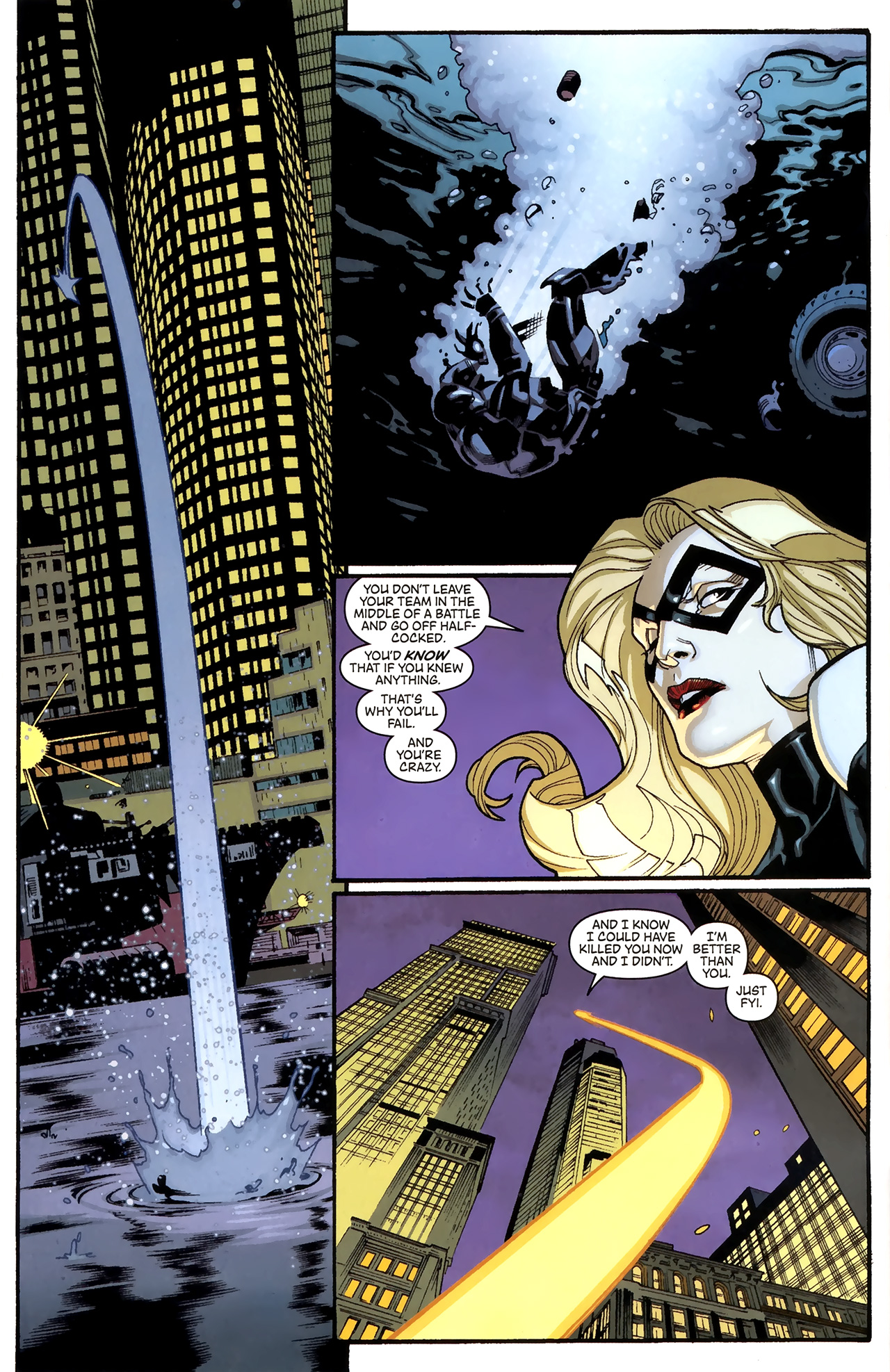
What’s even worse is the sliding scale of acceptable killing. Sentient beings from computer monsters to aliens? Murder at will. However, a guy who has, over the course of maybe six months at most, shot down an airplane full of civilians to see if a hero would catch it, ordered the death of several American citizens, hired mass murderers and villains under false pretenses, engaged in military actions in foreign lands, and placed scads of people who are loyal only to him in various sensitive places in the federal government? That guy is strictly off-limits.

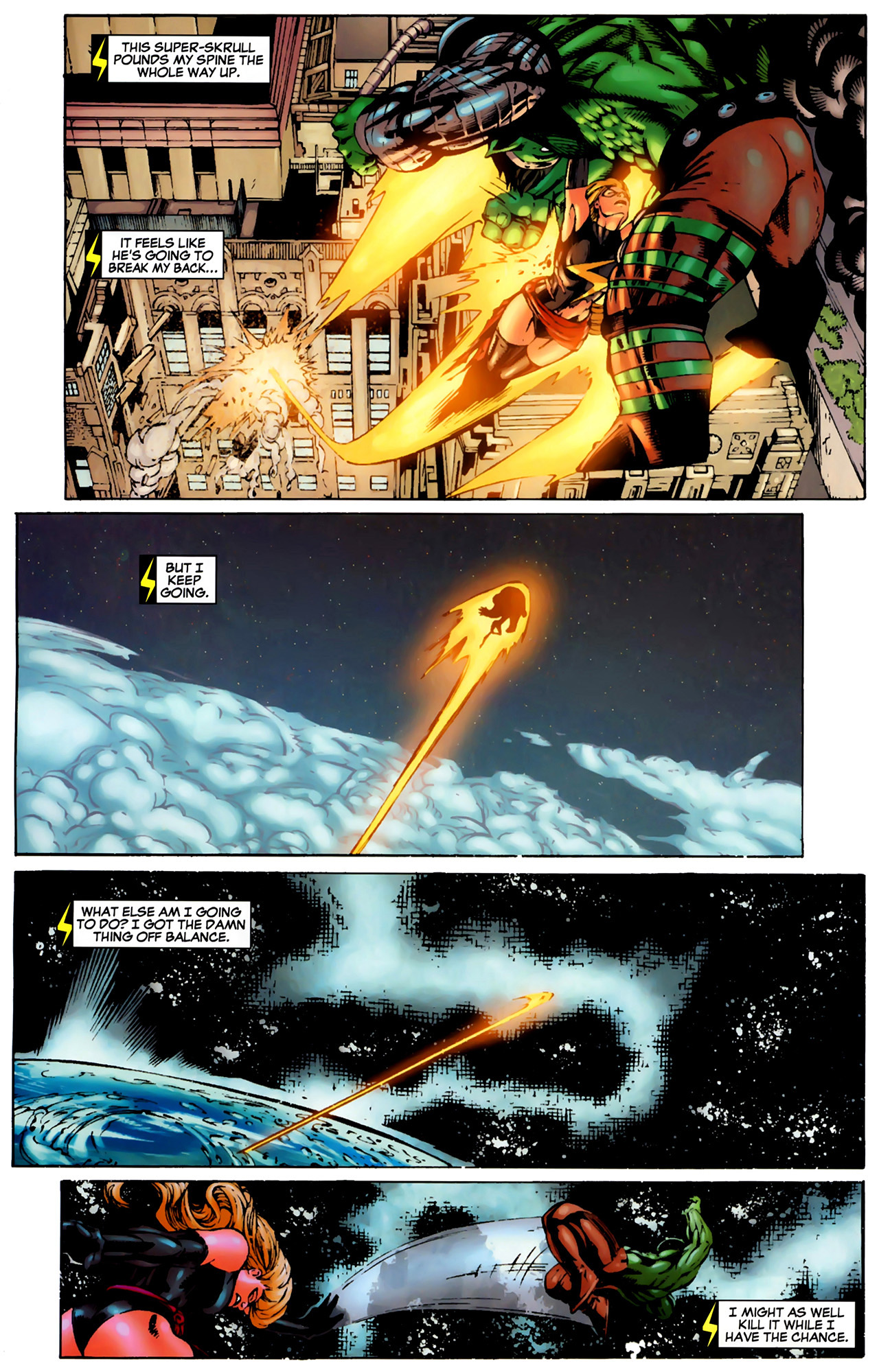
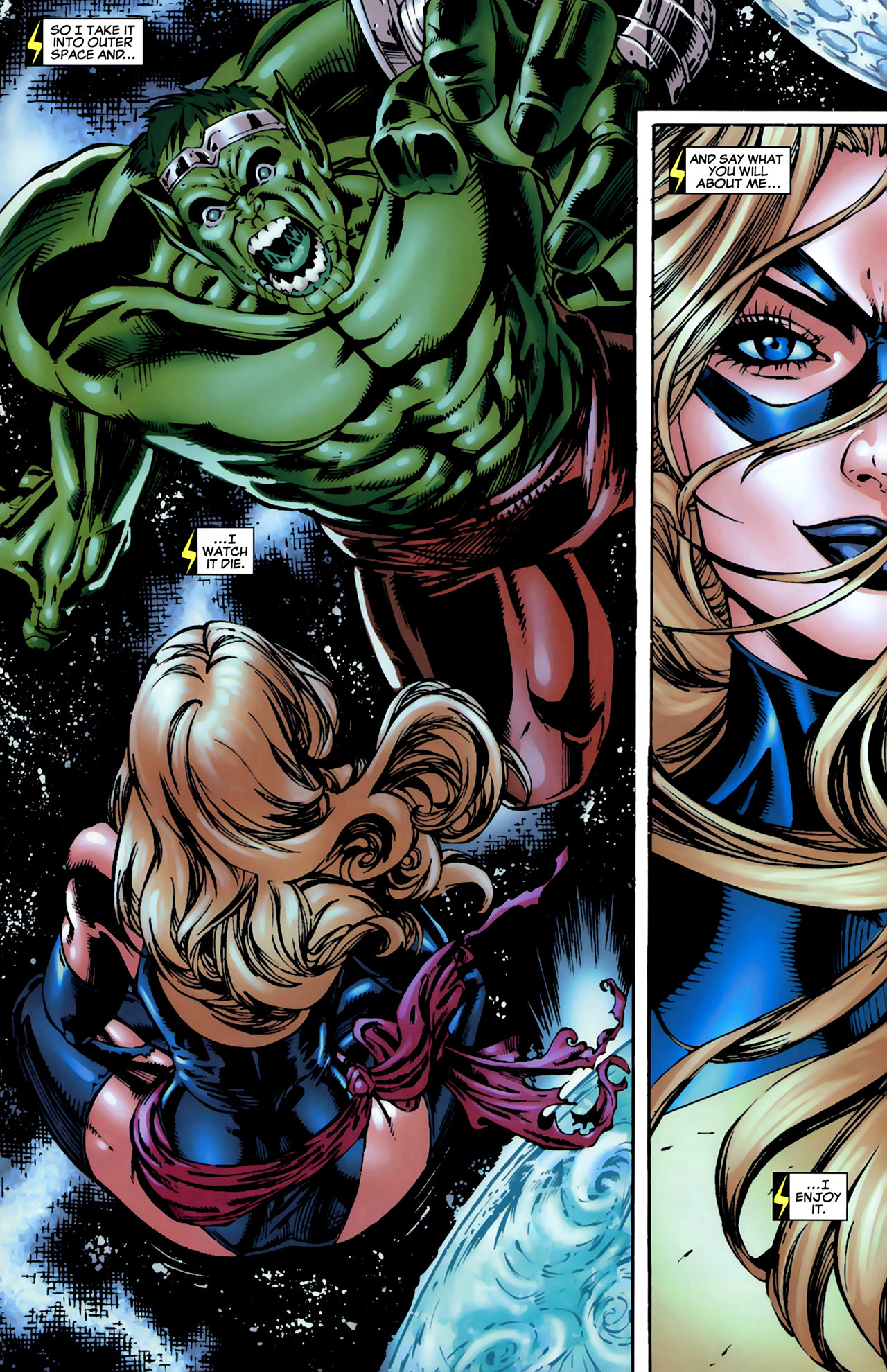
msmarvel28-01msmarvel28-02wahwahwhiner

See? Ms. Marvel is three things here. Creepy, smug, and a hypocrite. Why is it okay to kill aliens and not humans? Is that where “Thou shalt not kill” stops? “You weren’t born in Peoria, you’re fair game?”

It’s the hypocrisy that bugs me more than anything. When Hawkeye says that the Avengers should kill a man who has killed Spider-Man’s girlfriend, kidnapped his child, ruined the life of a good friend, created a vicious cycle of hate that infected Peter’s best friend Harry and his son, faked Aunt May’s death, and tortured Spider-Man for days… Spider-Man’s reaction, realistically, shouldn’t be to whine about how heroes don’t kill ever ever ever no matter what.

I’m not saying that all heroes should be bang bang shootem up all the time. That’s stupid. There are several perfectly good reasons not to kill someone, and killing would ruin the charm of certain characters. I don’t think Superman should ever kill anyone. Spider-Man, as the ultimate street level everyman hero, probably shouldn’t kill anyone, either.

(though back when i cared about that sort of thing, i realized that the one instance where spidey would kill would be if and when norman snaps, kidnaps MJ, or maybe Baby May, and it’s his last choice. he’d do it, and he wouldn’t feel good about it, but he wouldn’t regret it, either.)

But, to pretend that heroes should never kill, while their enemies continually up the ante and stack atrocity on top of atrocity and shoot past irredeemable and on into genocidal… you start to notice the guy behind the curtain. That’s when you realize just how the sausage is made and start caring less and less. Black Adam has millions of deaths on his resume. Vandal Savage destroyed Montevideo. Deathstroke’s blown up Bludhaven, and, along with Cheshire, nuked the capital of Qurac. Mongul destroyed Coast City.

At some point, you have to weigh your peace of mind and so-called moral high ground against thousands upon thousands of lost lives. And sometimes… it’s worth the sacrifice.

And that’s why the hard-line HEROES DON’T KILL is childish to me. It’s applying a black and white morality to a situation that doesn’t fit it any more. Back when Spider-Man was created, Doc Ock was killing people mainly by accident. Green Goblin just wanted to run the mob. Now? Now villains completely undercut the hero by simply existing, and every time we get one of the “I’m better than you, I don’t kill” scenes, or the scenes where the hero fights hard to save a villain’s life so that he can sleep soundly at night… well, I roll my eyes.

All I want is to see some nuance and maturity when taking on the idea of heroes killing, rather than heroes with barely a leg to stand on preaching directly at me. It’s not clever, it’s not smart, and we’re not children. Garth Ennis got it with his portrayal of the Punisher. It’s not even hard or really very complicated. Sometimes, the hard choice, the bad choice, the unreasonable choice, is the best possible choice to make. Sometimes you have to do bad to do good.

h1

Someone is wrong on the internet, David. And it’s you. It’s you.

November 4th, 2009 Posted by Esther Inglis-Arkell

Okay, and this Chad fellow, too.  For those of you unwilling to scroll down two entries, I’ll re-post David’s entry in full:

Chad Nevett on New Avengers #58:

Yeah, here’s the thing: not killing bad guys doesn’t make you better than them, it makes you a fucking pussy. It makes you responsible for everything negative they do after that point. No grey areas, no moral questions, no debates about what’s heroic and what’s not. […] I hate superhero comics for pretending that letting villains live is somehow the morally superior thing to do, because it’s not.

If you listened to the Fourcast! this week, and you should have, you’d know that I agree with every word Chad says. I wanted to have a longer excerpt, but it’s a pretty short review. Go read it.

Chad and David both seem to agree that in comics heroes should be able to occasionally kill villains.  I agree, with specific exceptions, with this general idea.

Where we differ crucially is what ‘killing’ means.  To quote Chad:

Should they kill every mugger ala the Punisher? No. Should they kill Norman Osborn when the chance arises? Um, yeah.

‘Killing’ someone encompases a variety of different concepts, from pre-planned murder to accidental manslaughter to legitimate self-defense.  I think that, if the situation were to arise in which a hero had to kill a villain in order to save the life of that villain’s intended victim, they should, morally, kill the villain.  That’s killing someone.

Killing Norman Osborn, or the Joker, or whoever else, when ‘the chance arises’ is not just killing someone.  That’s an execution.  There is a very distinct meaning to that, and there are very different consequences for it. Read the rest of this entry �

h1

Garth Ennis may hate superheroes…

November 3rd, 2009 Posted by david brothers

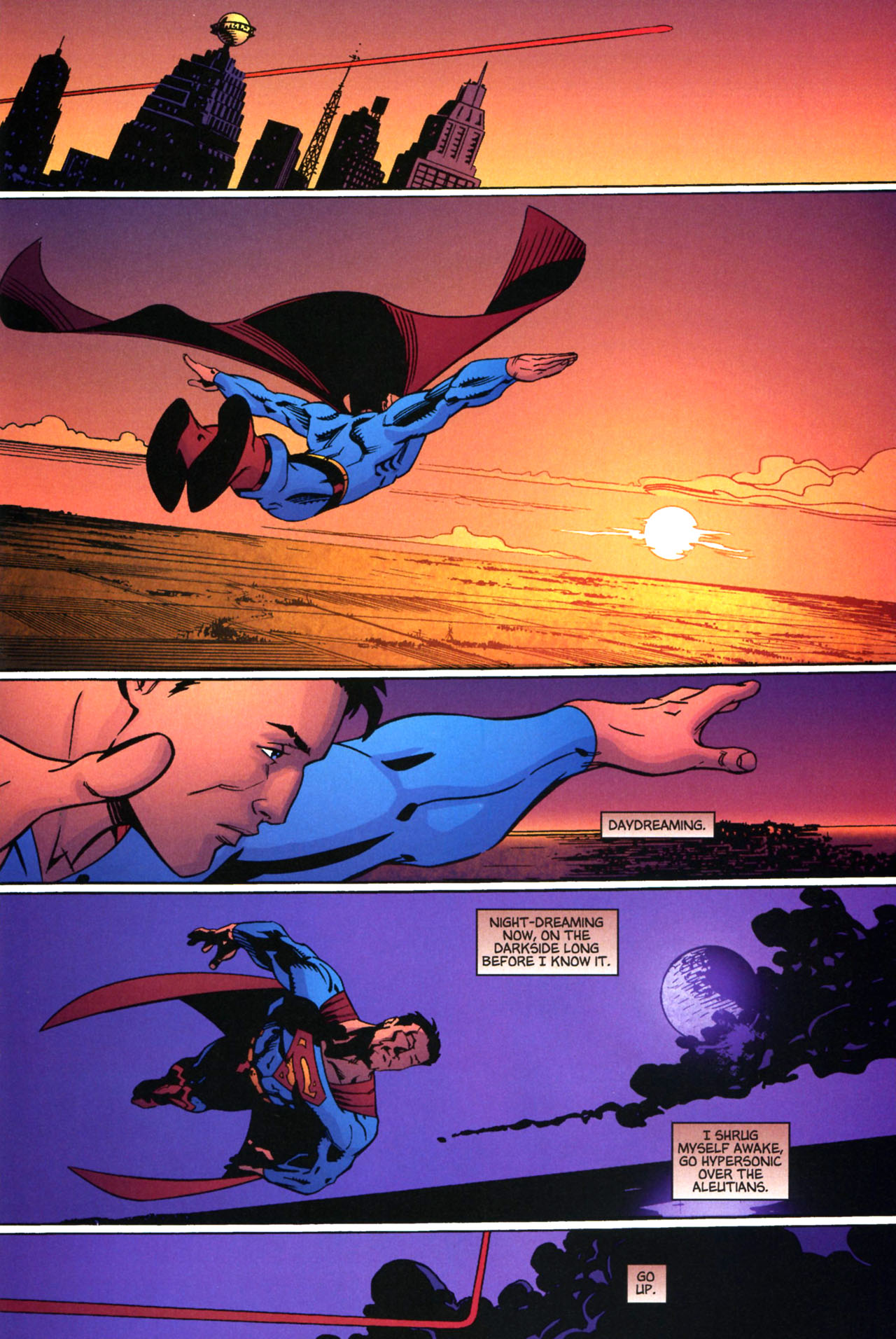
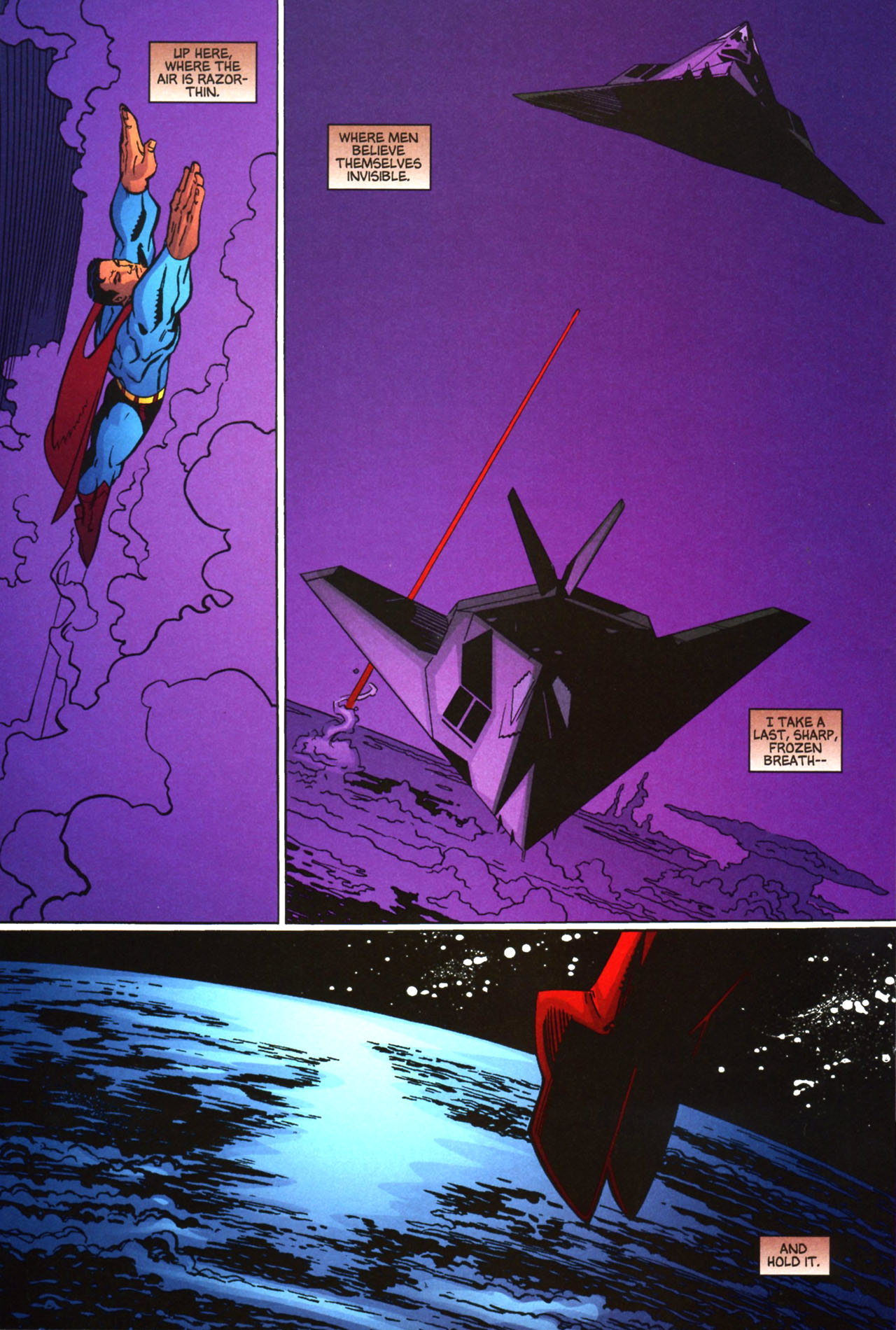
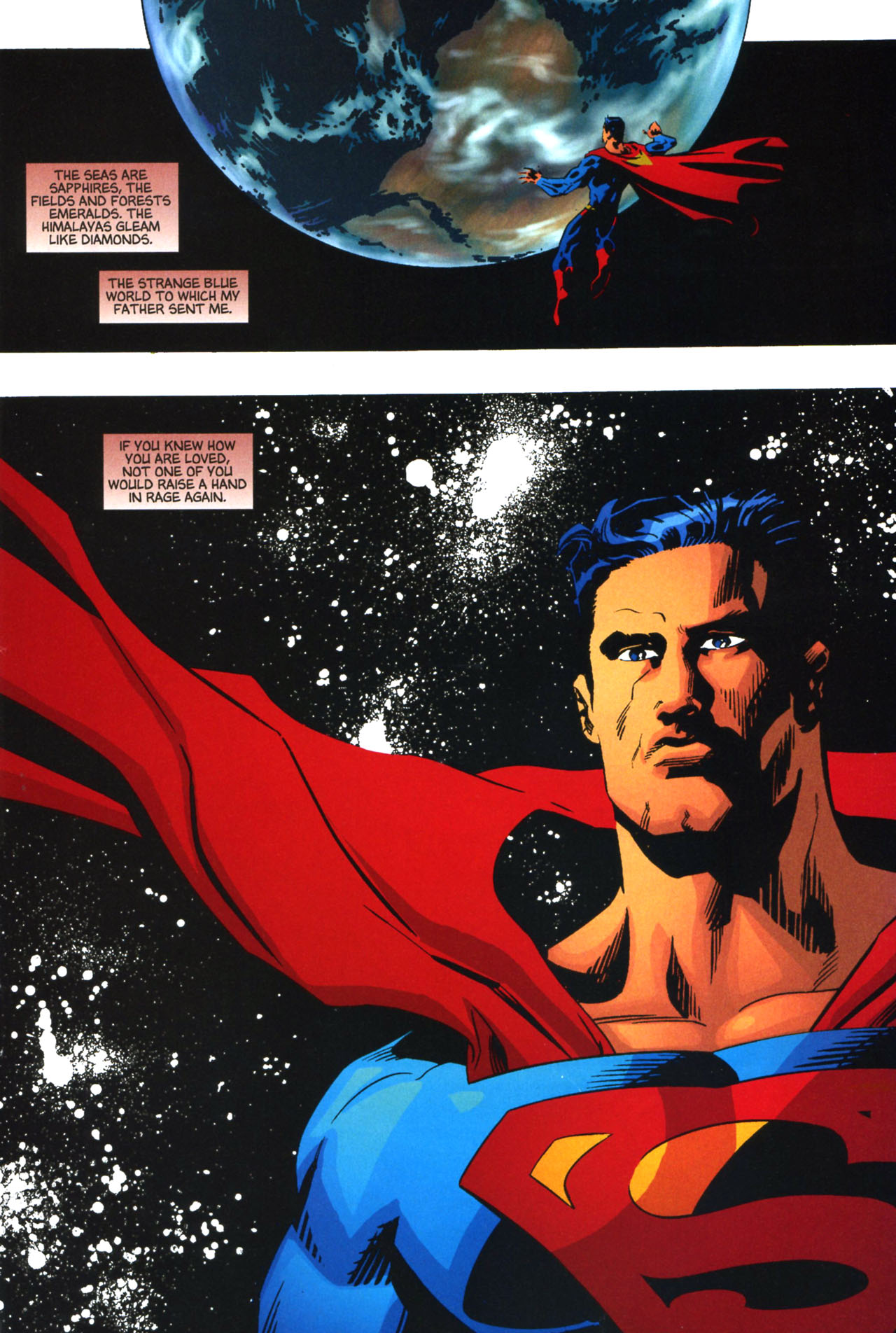
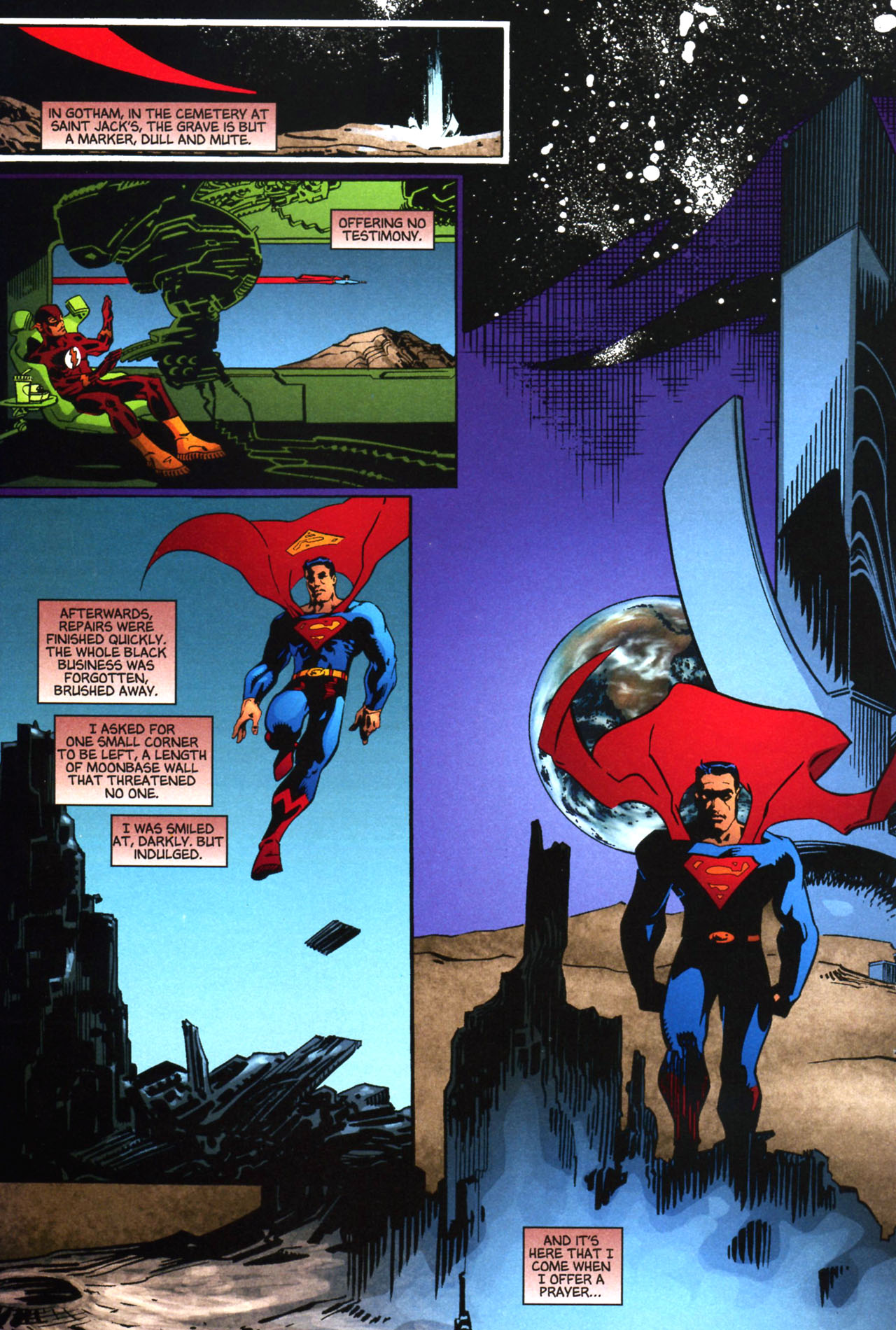
but he writes the best Superman this side of Grant Morrison.

JLAHitman02-01JLAHitman02-02JLAHitman02-03
JLAHitman02-04JLAHitman02-05

From JLA/Hitman, a two-issue miniseries that came out a couple years back. Words by Ennis, art by McCrea. DC, get to trading the rest of Hitman asap and include this, thanks.

h1

The Undertaker Comic Part 1: No-Selling in Ink Form

October 31st, 2009 Posted by Gavok

The history of the WWF/WWE can more or less be broken up into eras. There’s the Golden Age, followed by the Hogan Era, followed by the New Generation, followed by the Attitude Era, followed by the Crossover Era, followed by the Cena Era. At least, that’s how I see it. The Attitude Era is easily the most successful era, regarded for bringing wrestling into the media forefront. Chronologically, it begins with Stone Cold Steve Austin’s rise as a top face and ends with Wrestlemania 17, where Austin turns on the fans shortly after the company had freshly bought their competition, WCW.

Professional wrestling was at its apex during this era, mostly due to WWF and WCW trying to outdo each other. It seems silly now, but the idea of a WWF comic was pretty natural back then. In 1999, Chaos Comics got the rights to the property and let loose with a handful of comics. Mankind, The Rock and Chyna each got their own one-shot, while Steve Austin got a four-issue miniseries. I’ll save those for a later day.

Today I’m going to discuss The Undertaker’s comic. Unlike the others, he got a full-blown series out of the deal. It lasted 10 issues, plus specials. On one hand, it makes sense. Undertaker was always one of the most unrealistic and open-ended characters in the WWF. On the other hand, during the release of this series, Undertaker was the top heel of the company. We’re basically meant to root for the WWF’s top villain.

I’ll get into a who’s who for those uninitiated with wrestling in a bit, but first I’ll go over the Undertaker Halloween Special. While it did come out towards the end of the series, it doesn’t exactly fit in with anything and makes as a good introduction to the four wrestling-based characters.

Read the rest of this entry �

h1

Watch out now, she’ll chew you up…

October 30th, 2009 Posted by david brothers

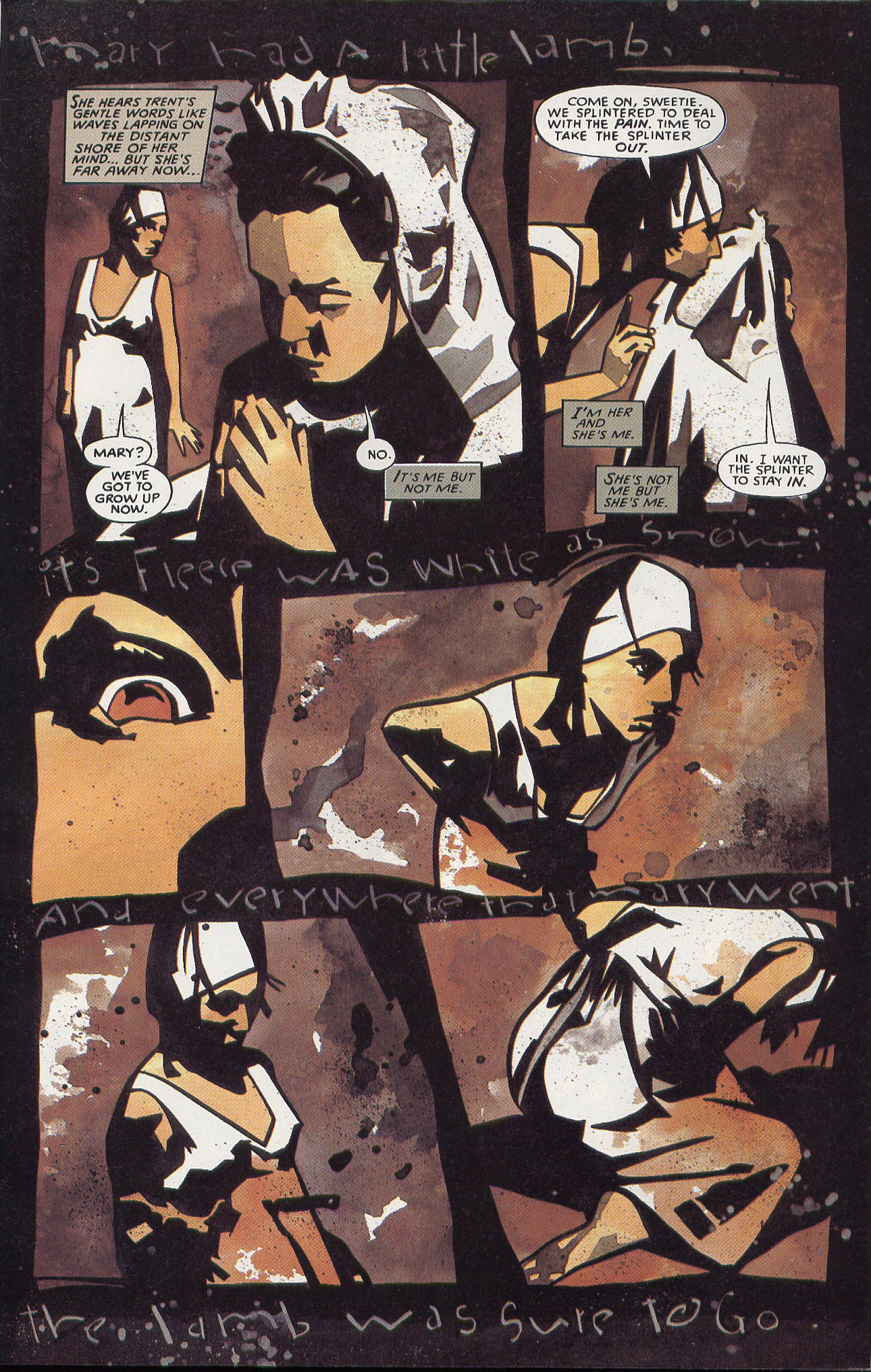
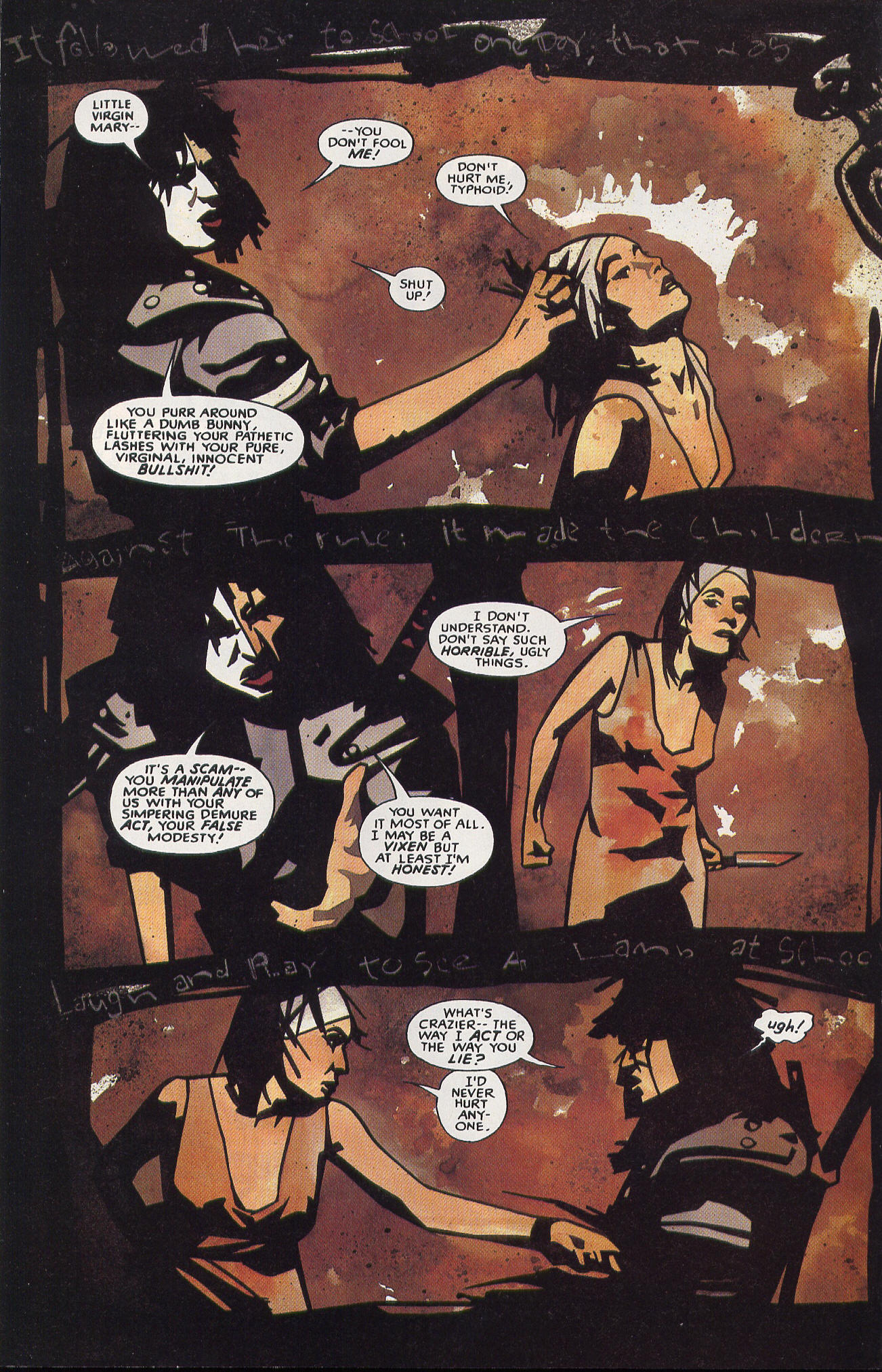
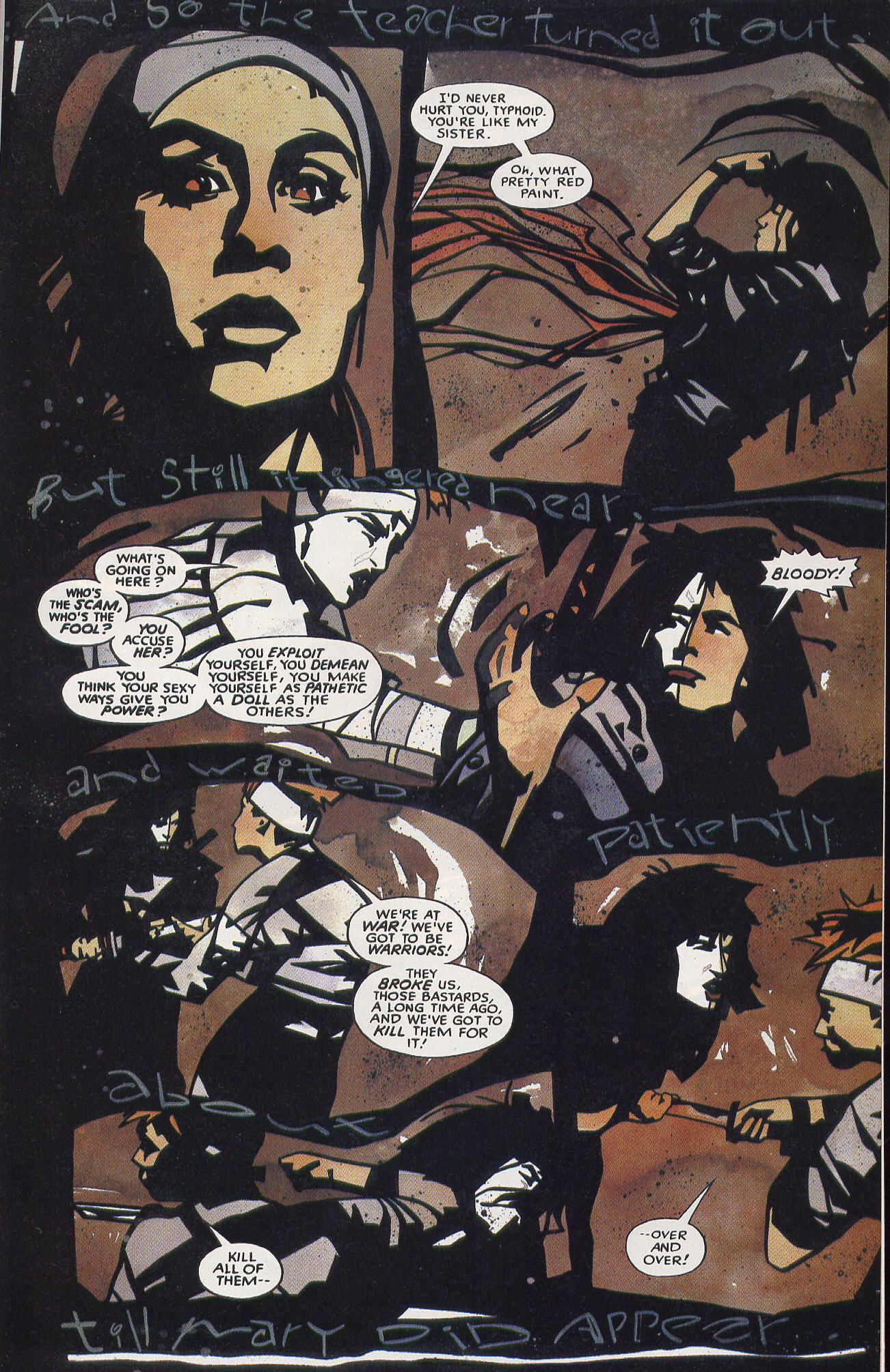
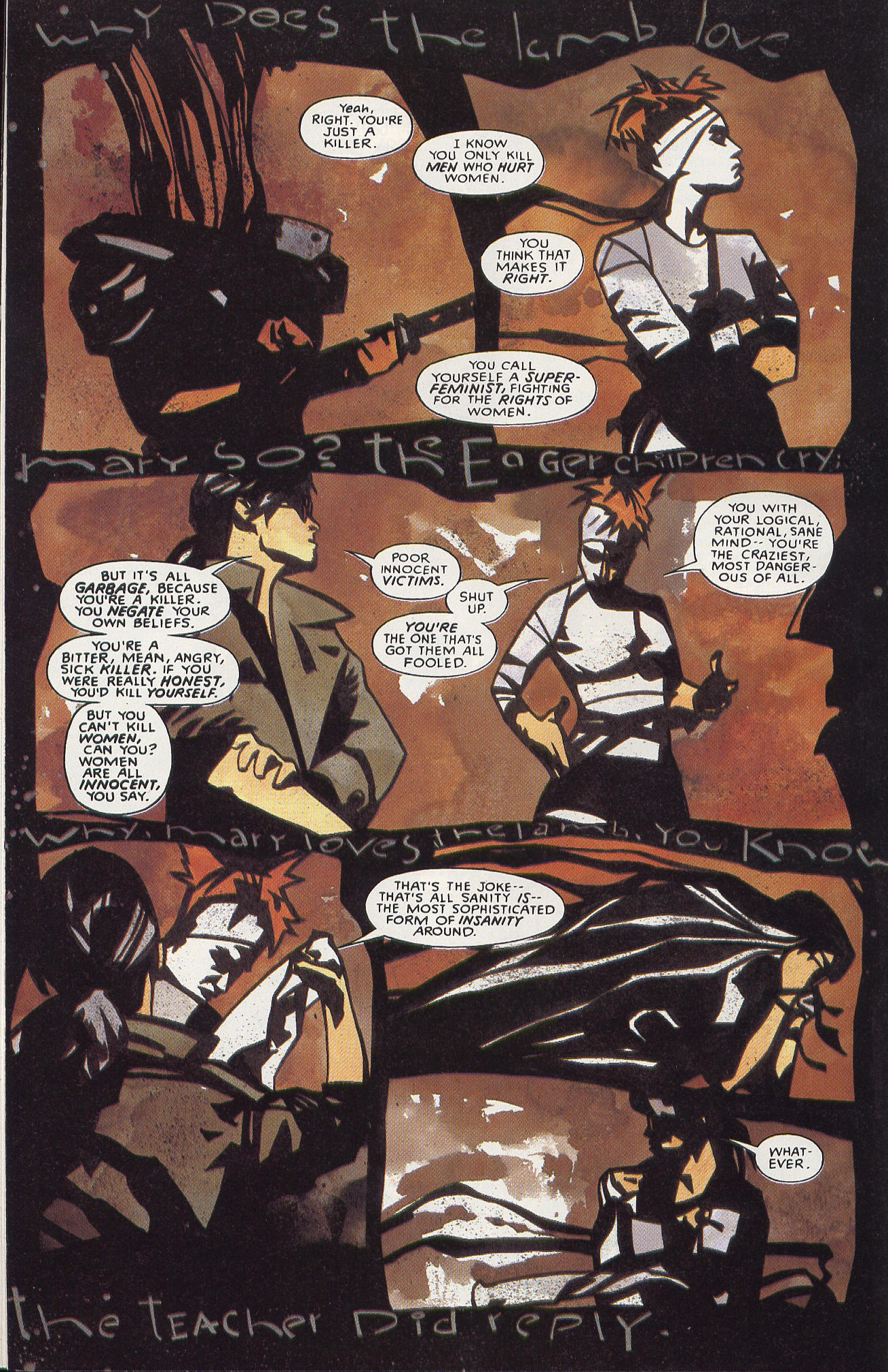
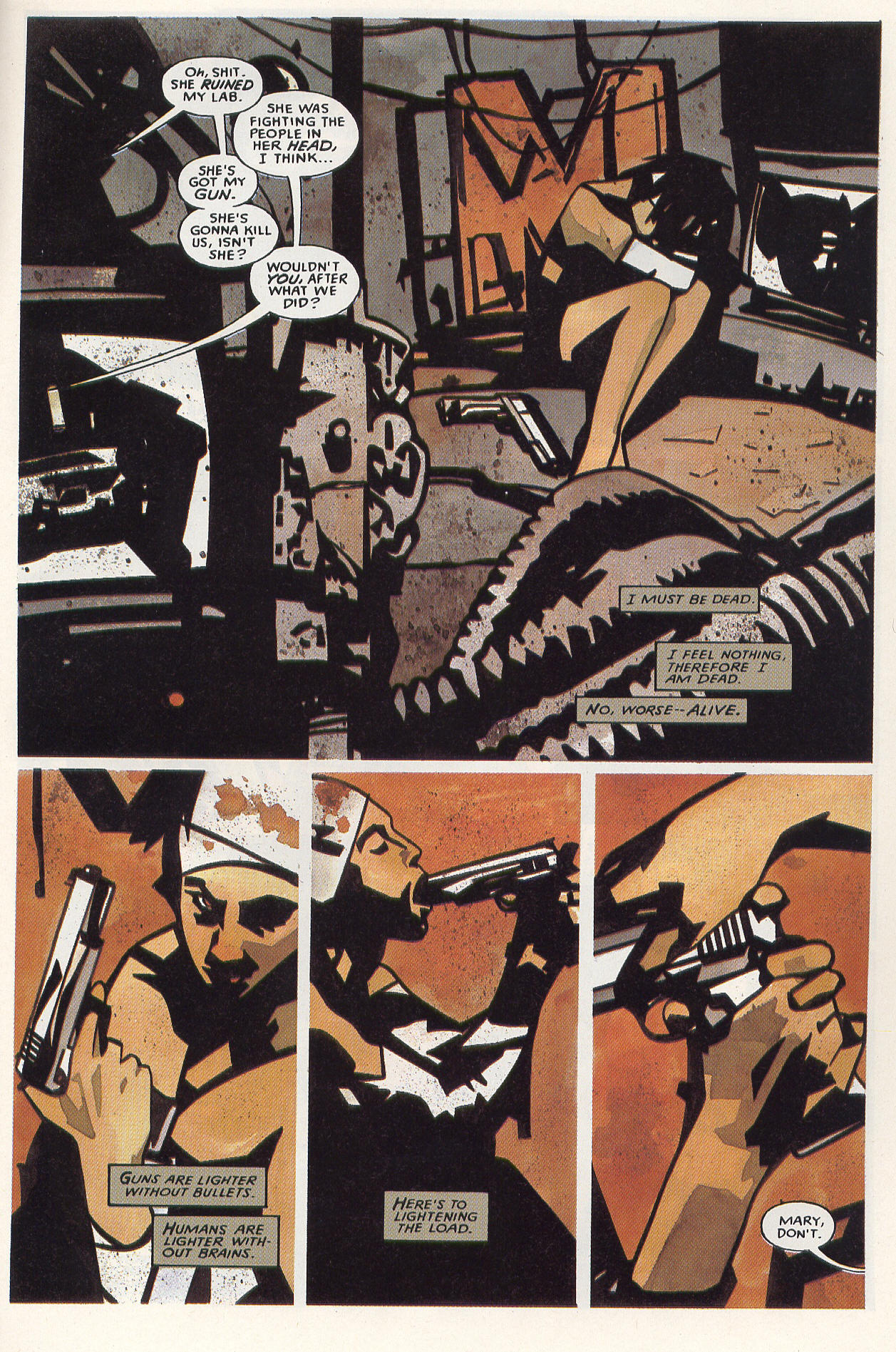
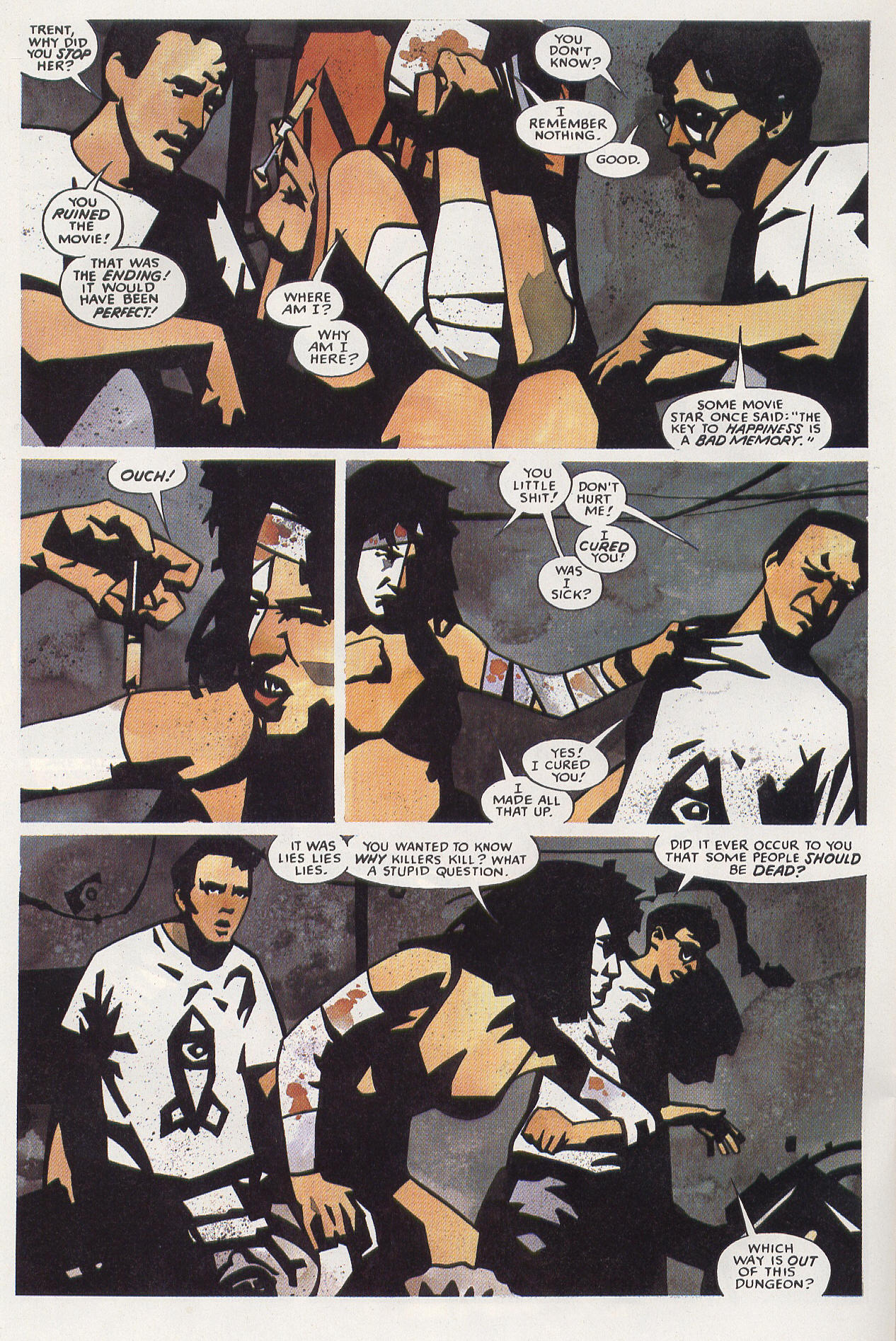
From Typhoid #4, the last issue of Ann Nocenti and John Van Fleet’s 1996 miniseries from Marvel Edge:

Typhoid50Typhoid51Typhoid52
Typhoid53Typhoid54Typhoid55

Typhoid Mary is one of my favorite comics characters and was created by one of my favorite writers and one of my favorite artists. This is a good scene that illustrates exactly what she is. Mary, Typhoid, Bloody, and Mary Walker. Virgin, Whore, Femme Fatale, and Human. Parts of a whole.

I can’t figure out my favorite part of this scene. It’s either when Mary Walker wakes up and puts the gun in her mouth (“here’s to lightening the load”) or the way she switches from Mary to Typhoid to Bloody in quick succession on the next page. Bloody’s justification for killing speaks volumes, too, with shades of Ennis’s Frank Castle lurking in her words:

“You wanted to know why killers kill? What a stupid question. Did it ever occur to you that some people should be dead?”

I dug this mini a lot. I’ll have to work up a real review for it, because it’s really very interesting from a variety of viewpoints. But honestly, I really, really want Ann Nocenti to do some more comics. These are fascinating, and since the blogosphere has a decently-sized feminist faction, I’d like to think that we’d get some interesting discussion of her old work out of it.

This book also convinced me that, like Noh-varr, Bendis has no qualms about taking older, previously-established characters and sanding them down until they fit into the fictionsuit he needs to make his story work. Typhoid Mary goes from representing corruption and beauty and social pressure and imbalance to being… Generic Loopy Crazy Chick With Her Boobs Out. Noh-varr goes from Angry Dane McGowan Bent on Fixing Earth By Force to Confused Baby Hero, Easily Led Around by An Obvious Villain. It’s really soured me on his writing. It feels so lazy, like it’s sucking all the potential out of these wonderful things just to have them in a story.

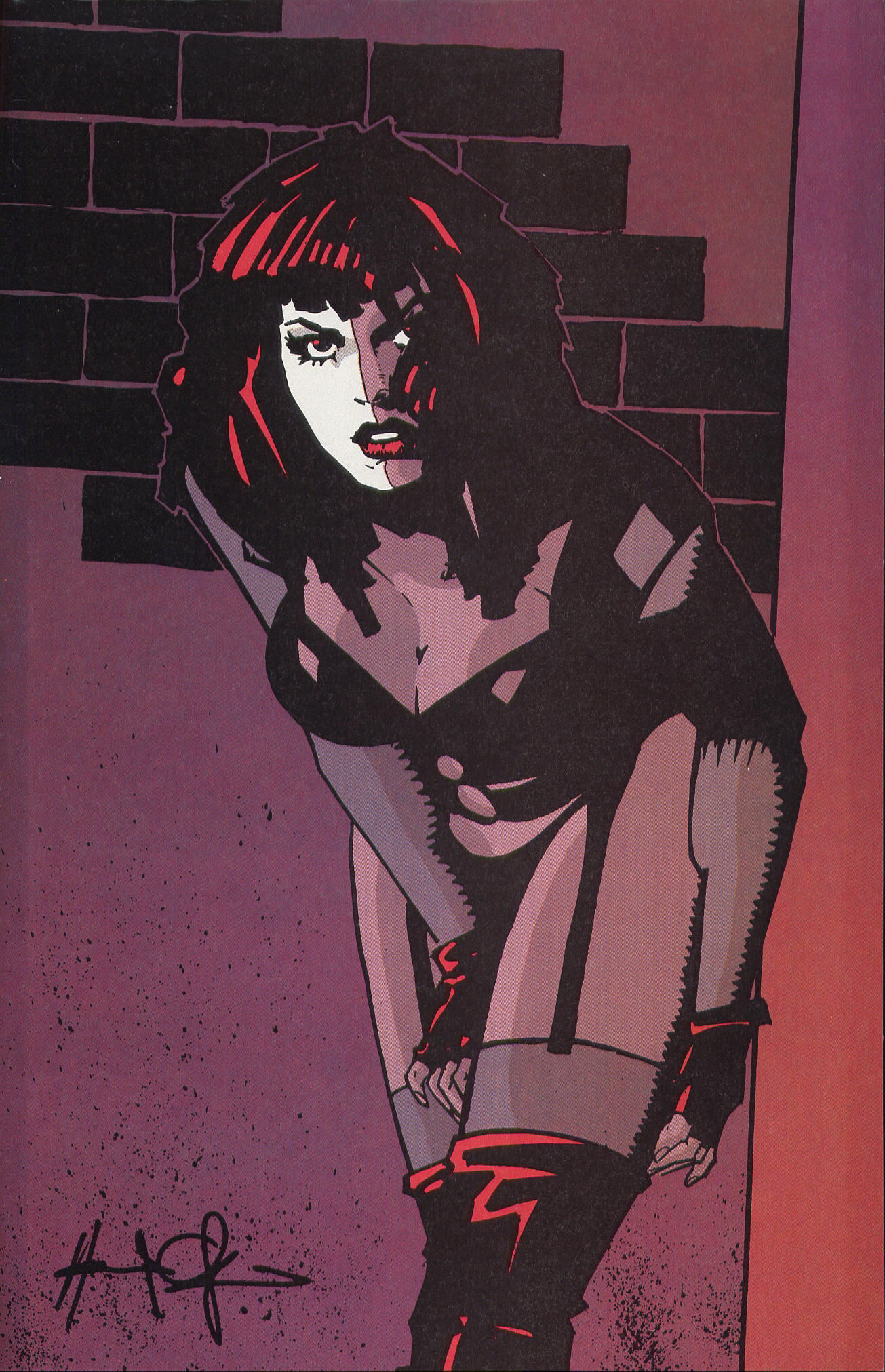
There were a few pinups in the back of the book. It blew my mind that Howard Chaykin did one:
Typhoid66